
RIDGE CAPPING REPAIR GUIDE
Roof bedding supports your ridge caps. Roof pointing is the exposed finishing layer that bonds and seals around them. If the pointing has deteriorated but the bedding underneath remains firm, repointing may be enough. If ridge caps are loose or the bedding is crumbling, the affected caps generally need to be rebedded before new pointing is applied.
That distinction is important. Adding fresh pointing over failed bedding might improve how a roof looks without correcting the underlying support problem.
Roof tile bedding and pointing are easy to overlook because most of the system sits high on the ridges and hips of the roof. Problems often become obvious only when mortar starts appearing in gutters, cracks open around ridge caps, a ridge tile moves, or moisture begins entering the roof space.
On an older tiled roof, there can also be another complication. Repair work may uncover a cracked ridge cap or a damaged field tile that is no longer manufactured. In that situation, identifying the correct replacement can be just as important as repairing the mortar around it.
Recycling Roof Tiles supplies roofing supplies, recycled roof tiles, ridge accessories, bedding products and flexible pointing for roof repair and restoration work. If an older tile or ridge accessory needs replacing, we can also help identify and source compatible stock.
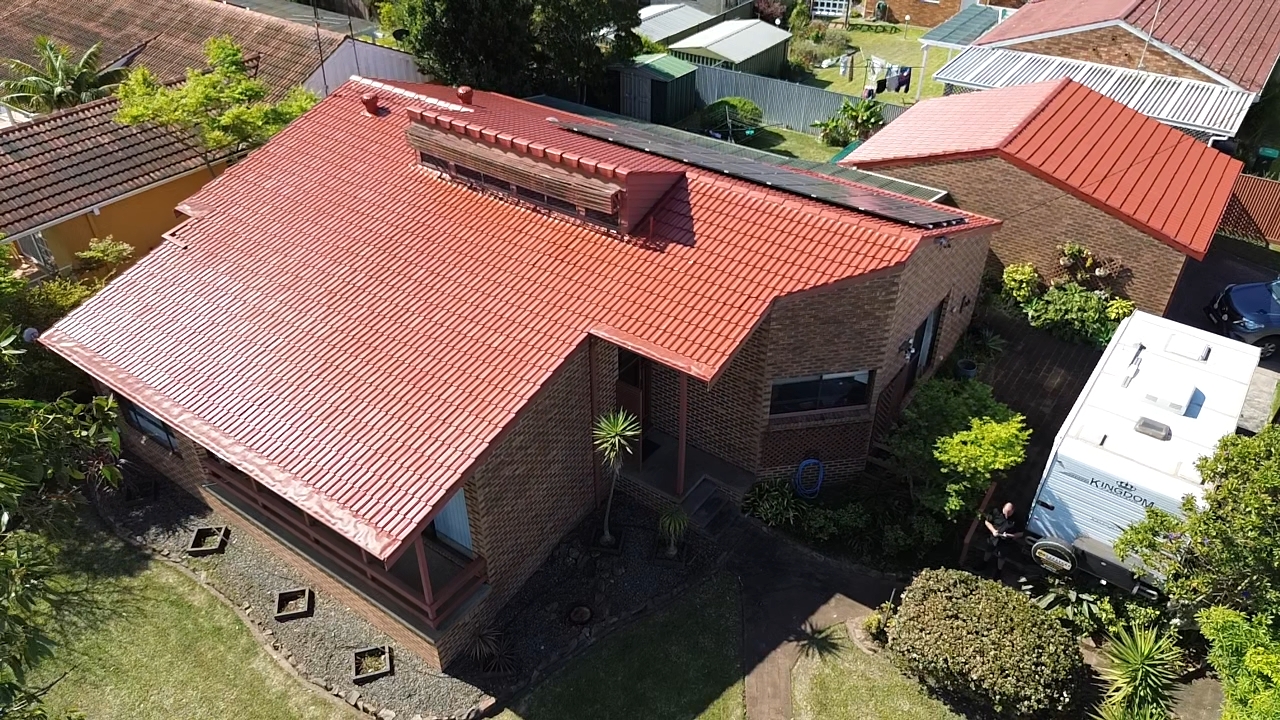
Ridge and hip capping run across some of the most exposed junctions on a tiled roof. The condition of the mortar beneath and around these caps determines whether repointing alone is enough.
QUICK ANSWER
What Is the Difference Between Roof Bedding and Pointing?
Bedding is the mortar beneath ridge caps that supports and positions them along the ridges and hips of a tiled roof.
Pointing is the exposed finishing material applied along the edges of the ridge caps. It helps secure the ridge system and provides a weather-resistant finish.
The key repair question is therefore not simply whether the pointing is cracked. It is whether the bedding underneath is still capable of supporting the ridge caps.
Where Are Bedding and Pointing Used on a Tiled Roof?
The most obvious location is the ridge, which is the horizontal line where two roof slopes meet at the top of the roof. Bedding and pointing are also commonly associated with hip capping, where a ridge cap runs diagonally down an external roof junction.
The ridge caps are positioned over the roof tiles and supported by bedding mortar. Pointing is then applied to the exposed sides of the cap to create the finished joint.
Depending on the roof design, mortar and specialised tiles may also be involved around roof edges, hip starters and other junctions. If the problem is occurring around a verge, eave, barge tile or hip edge rather than the main ridge, our guide to repairing roof tiles at the edge explains why these areas sometimes require a different approach.
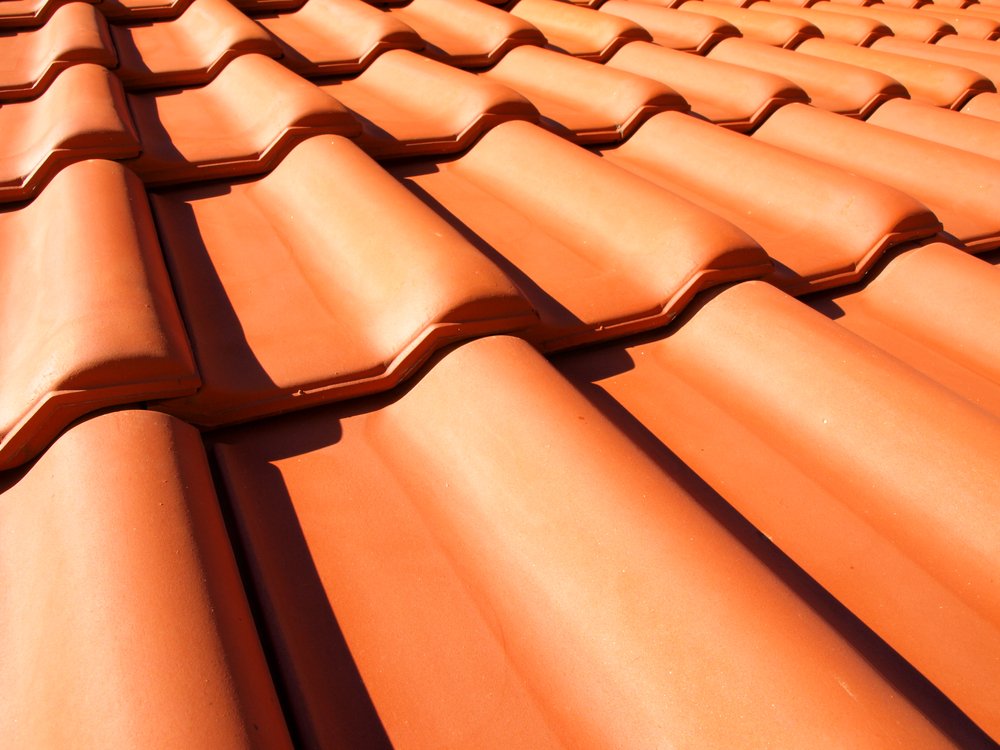
A tiled roof works as a complete system. Ridge caps, field tiles, overlaps, channels and junctions all need to remain compatible and correctly positioned.
How Can You Tell If Roof Tile Bedding or Pointing Is Failing?
Some deterioration can be visible from ground level, while other problems become apparent only during a proper roof inspection.
Warning signs can include cracked or separating pointing, gaps beneath ridge caps, ridge tiles that appear out of alignment, pieces of mortar on the roof or in gutters, and ridge caps that move when professionally inspected.
Inside the roof space, moisture staining around timbers or insulation can indicate water entry, although the position of a stain does not necessarily identify the exact point where water entered the roof.
Important: A visible crack tells you that something has deteriorated, but it does not automatically tell you whether the repair requires pointing only or complete rebedding. The condition and stability of the material underneath needs to be assessed.
Repoint or Rebed? The Condition Underneath Matters More Than the Crack You Can See
This is where roof repair terminology can become confusing for homeowners.
If the ridge cap remains firmly supported and the existing bedding mortar is stable, the problem may primarily involve the exposed pointing. Proper preparation followed by new flexible pointing may be sufficient.
If the ridge cap moves, large pieces of bedding break away, the mortar beneath the cap has become weak or powdery, or the ridge cap has shifted out of position, simply applying more pointing around the outside does not rebuild the failed support underneath.
In that situation, the affected ridge caps generally need to be lifted, the failed bedding removed, and the caps reset into new bedding before pointing is completed.
| What is found | What it may indicate | Typical repair direction |
|---|---|---|
| Pointing is cracked but the ridge cap remains solid | Deteriorated pointing over serviceable bedding | Repointing may be sufficient |
| Ridge cap rocks or moves | Loss of bedding support or bond | Assess for rebedding |
| Mortar beneath the cap crumbles or falls away | Failed or deteriorating bedding | Remove failed bedding and rebed affected caps |
| The ridge cap itself is cracked | Tile damage as well as possible mortar deterioration | Replace the cap and repair surrounding bedding or pointing as required |
| Problems occur across several ridge and hip lines | Widespread ageing or deterioration | Assess the entire ridge-capping system rather than repeatedly patching isolated areas |
Why Do Roof Bedding and Pointing Deteriorate?
Bedding and pointing live in one of the most exposed parts of a house. They experience years of sun, rain, wind, temperature change and normal movement in the roof structure.
Older cement-based pointing can become hard and brittle with age. Repeated expansion and contraction can then produce cracking or separation. Bedding mortar can also lose strength over time, particularly where water has repeatedly reached deteriorated joints or where earlier repairs were poorly prepared.
Roof movement is another factor. Timber framing, battens, roof tiles and ridge components do not remain perfectly static throughout the year. A rigid joint is less able to accommodate movement than a properly installed flexible pointing system.
Foot traffic can contribute too. Solar work, antenna installation, gutter maintenance and other jobs can put additional stress on older tiles and ridge areas. It is one reason broken tiles are often discovered at the same time as ridge repairs.
Traditional Cement Pointing vs Modern Flexible Pointing
Many older Australian tiled roofs were finished with relatively rigid cement-based pointing. It can provide a strong finish, but once aged and brittle it has limited ability to tolerate movement without cracking.
Modern flexible pointing products are designed to accommodate normal roof movement while bonding around ridge caps. That is why flexible pointing is now common in roof restoration and ridge-capping work.
Australian roof tile installation is covered by AS 2050:2018. The Housing Industry Association’s overview of AS 2050:2018 explains that the standard covers materials including flexible pointing and also addresses how bedding and pointing are to be installed.
Recycling Roof Tiles supplies flexible pointing and roof restoration products for roofers and homeowners carrying out tiled roof restoration work.
IMPORTANT DISTINCTION
Flexible Pointing Is Not a Substitute for Missing Bedding
Flexible pointing is a high-performance finishing and bonding material, but it does not change the basic role of the bedding beneath the ridge cap.
If substantial bedding has disappeared or the ridge cap no longer has sound support, packing pointing compound into the visible gap is not the same as rebuilding the failed bedding and correctly resetting the cap.
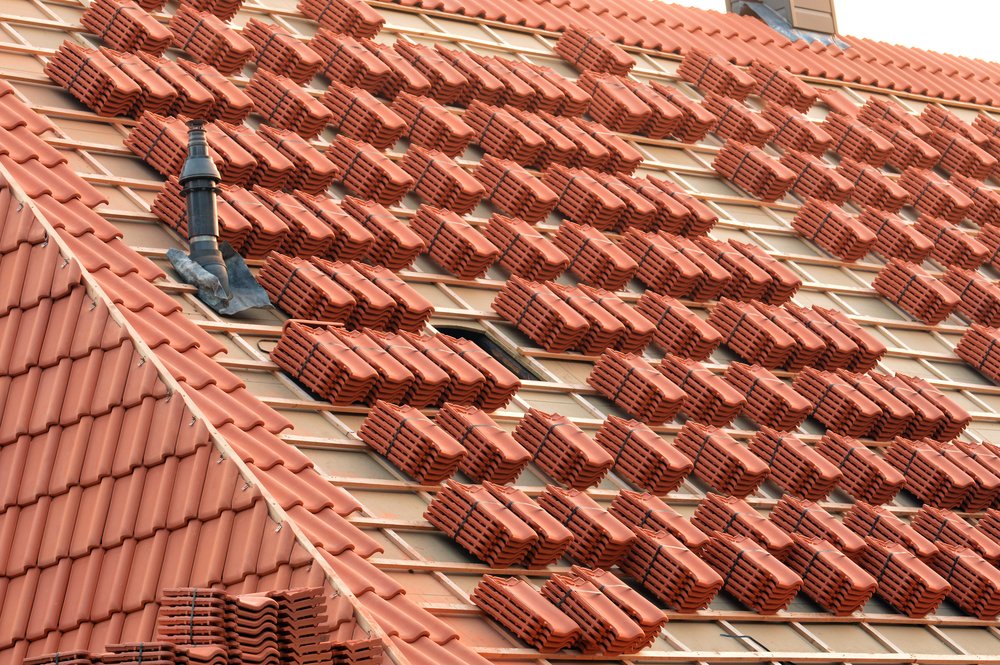
Roof tiles, battens, ridge details and mortar work together. Correct ridge repair needs to preserve how the tiled roof has been designed to sit, overlap and drain.
Can Only Part of a Roof Be Repointed or Rebedded?
Yes. Roof repairs do not automatically need to cover every ridge cap on the building.
If deterioration is genuinely localised, a roofer may be able to repair the affected ridge or hip while leaving sound sections undisturbed. This can occur after impact damage, isolated movement or a previous repair failure in one area.
The important question is whether the apparently isolated problem really is isolated.
If the pointing is failing across several roof slopes, mortar is breaking away along multiple hips, or ridge caps are loose in different parts of the roof, repeatedly patching one crack at a time may not be the most sensible long-term approach.
The same principle applies to the tiles themselves. A few damaged tiles can often be replaced without replacing an otherwise serviceable tiled roof. Our guide to replacing only a few broken roof tiles explains when a localised repair can make more sense than a much larger reroof.
What Happens If Damaged Bedding or Pointing Is Left Unrepaired?
Deterioration around ridge capping tends to progress rather than repair itself.
A small pointing crack may remain mainly cosmetic for some time, but separation can gradually increase. Where the bedding underneath has already lost strength, movement can place additional stress on the ridge cap and surrounding mortar.
Open joints can also make weather entry more likely. Wind-driven rain is particularly important because water does not always fall vertically onto a roof. It can be driven into deteriorated junctions from the side.
Once a ridge cap becomes loose or displaced, the repair scope may grow. Damaged caps can need replacing, neighbouring tiles may be disturbed, and deteriorated mortar may need to be removed over a larger section.
Do not judge urgency by the size of one visible crack.
A narrow surface crack over stable bedding can be a very different defect from a similar-looking crack beside a ridge cap that is already moving. The stability of the complete ridge assembly matters more than appearance alone.
Can Cracked Roof Pointing Cause a Leak?
It can contribute to water entry, but a cracked section of pointing is not proof that it is the only source of a leak.
Tiled roofs manage water through a combination of tile overlaps, channels, flashings, valleys, ridge details and other junctions. Water can enter in one location and travel across sarking, timber or other surfaces before becoming visible on a ceiling.
This means replacing a cracked tile or repointing a visible crack at random is not a reliable leak diagnosis.
A proper assessment should determine whether the ridge area is actually admitting water and whether there are other defects nearby.
A Tiled Roof Needs to Manage Water, Not Simply Look Sealed
One of the mistakes people make with older tiled roofs is assuming that every visible opening should simply be filled with mortar or sealant.
Roof tiles are designed as part of a drainage system. Water channels, overlaps and roof junctions need to remain able to perform their intended function.
A ridge repair therefore needs to do more than create a neat-looking external line. It also needs to preserve the way the roof sheds incidental moisture and directs rainwater down the roof surface.
This is another reason roof pointing should be treated as part of a roofing system rather than as a cosmetic bead of material around the top of the roof.
Should Bedding and Pointing Be Repaired Before Roof Painting?
Yes. Necessary tile, ridge and mortar repairs should be completed before the decorative coating system.
Roof paint cannot stabilise a loose ridge cap. It cannot rebuild failed bedding and it cannot turn a cracked tile into a sound tile.
A sensible restoration sequence is to inspect the roof, identify broken tiles and caps, complete any necessary rebedding, apply the appropriate pointing system, allow repair materials to cure according to their product requirements, and then proceed with compatible primers or roof coatings.
Painting first can also make later repairs unnecessarily messy because newly repaired sections may then need to be recoated.
If you are considering coating an older concrete tile roof, our guide to painting over existing concrete roof tile coatings explains why surface condition and preparation matter before another coating is applied.
Sometimes the Ridge Cap or Roof Tile Needs Replacing Too
Rebedding work can reveal something that was difficult to see from the ground: the mortar may not be the only component that has failed.
A ridge cap can be cracked, badly chipped or unsuitable for reuse. A field tile immediately below the ridge may also be broken and become accessible once the capping is lifted.
On a modern roof with current profiles, sourcing a replacement can be relatively straightforward. On an older NSW roof, it can be much harder.
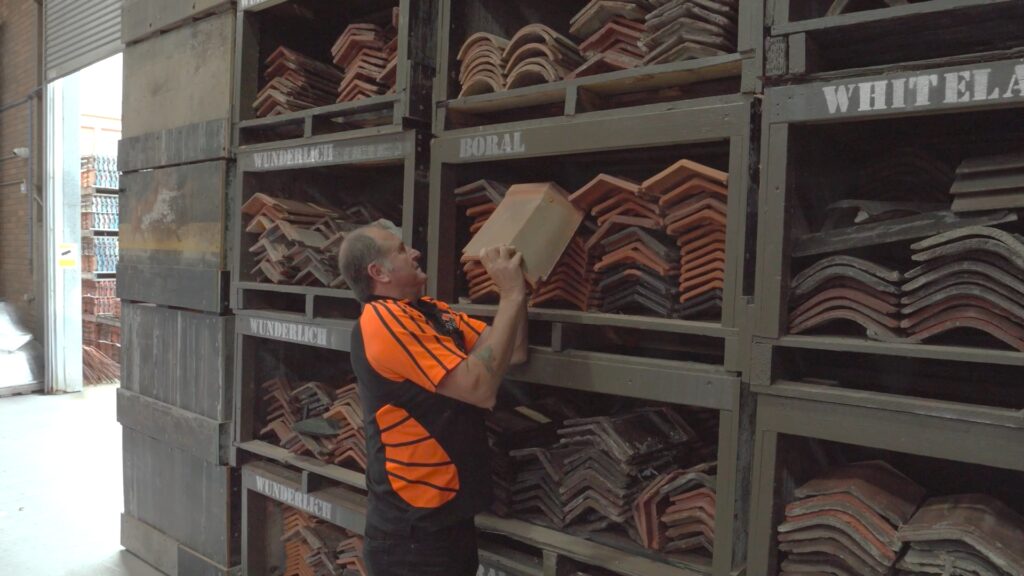
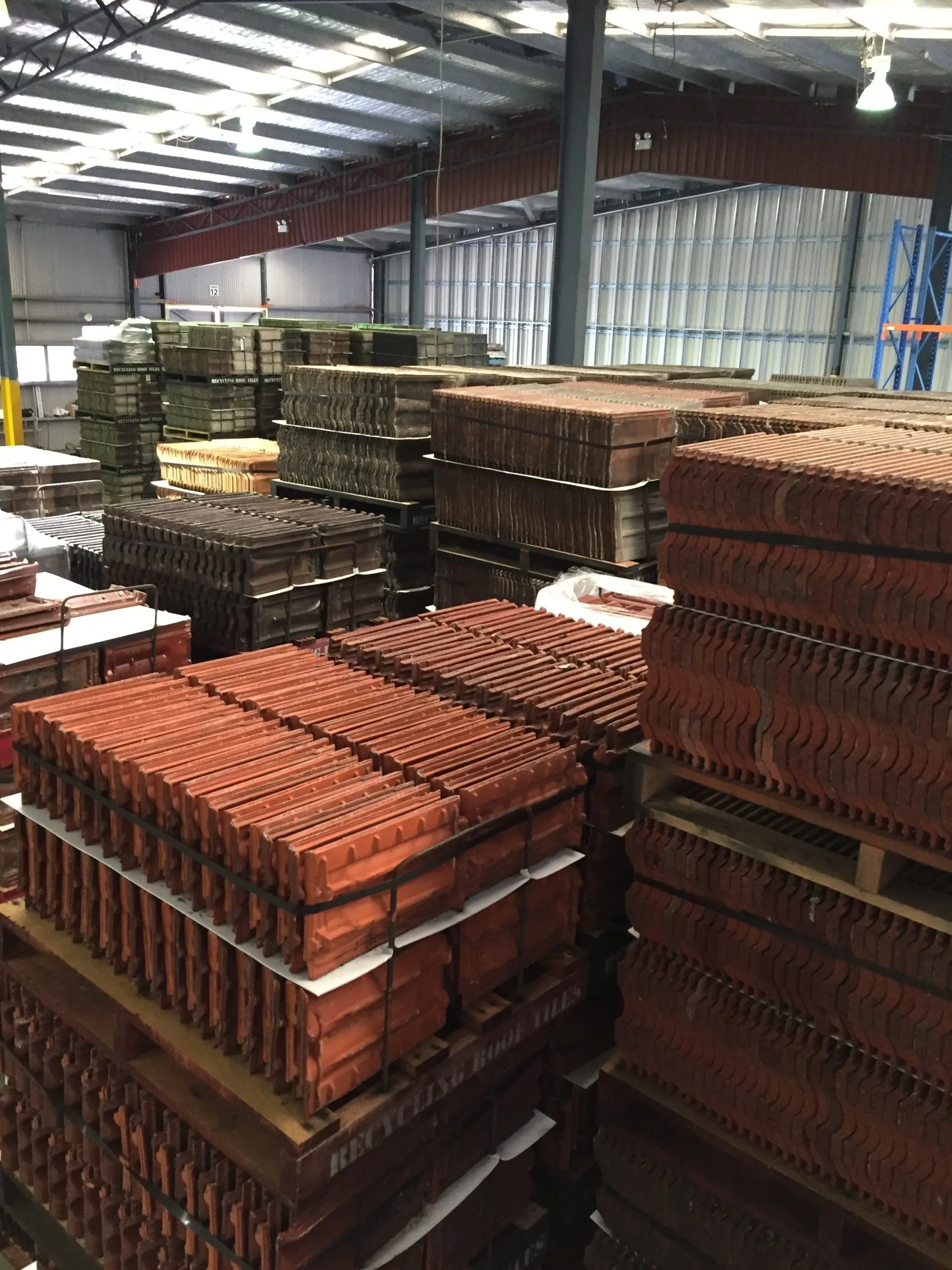
Older ridge caps come in different forms as well as different materials. Recycling Roof Tiles keeps recycled capping and accessory pieces alongside its field-tile stock.
Many older concrete and terracotta profiles have been discontinued. Ridge accessories have changed too, so an old cap cannot necessarily be replaced with whichever new ridge tile happens to look closest.
Recycling Roof Tiles stocks recycled cement roof tiles, terracotta roof tiles and associated roofing accessories for repairs across NSW.
If you are dealing with an older or unknown tile, it is worth identifying the profile before the roof is opened up. Browse our guide to old roof tile profiles found on NSW homes or use our old roof tile identification guide.
For older roofs: Profile comes before colour. A replacement tile or accessory first needs to fit and function correctly. Colour and weathering can then be considered.

Older NSW roofs contain a surprisingly wide range of tile profiles. Once a profile disappears from new production, recycled stock can become particularly important for targeted repairs.
Matching an Old Tile Means More Than Finding the Same Colour
This becomes particularly important when rebedding exposes a cracked tile underneath the ridge.
Two concrete roof tiles can have a similar wave pattern when viewed from above and still be incompatible. The replacement may use a different sidelock, water channel, nib position, cover width or overall working dimensions.
If the replacement does not sit correctly with the neighbouring tiles, it can rock on the batten, sit too high or interfere with the intended overlap.
That is why a physical profile match comes before cosmetic colour matching.
For difficult repairs, our spare and replacement roof tiles service can help with older concrete and terracotta profiles that are no longer easy to obtain new.
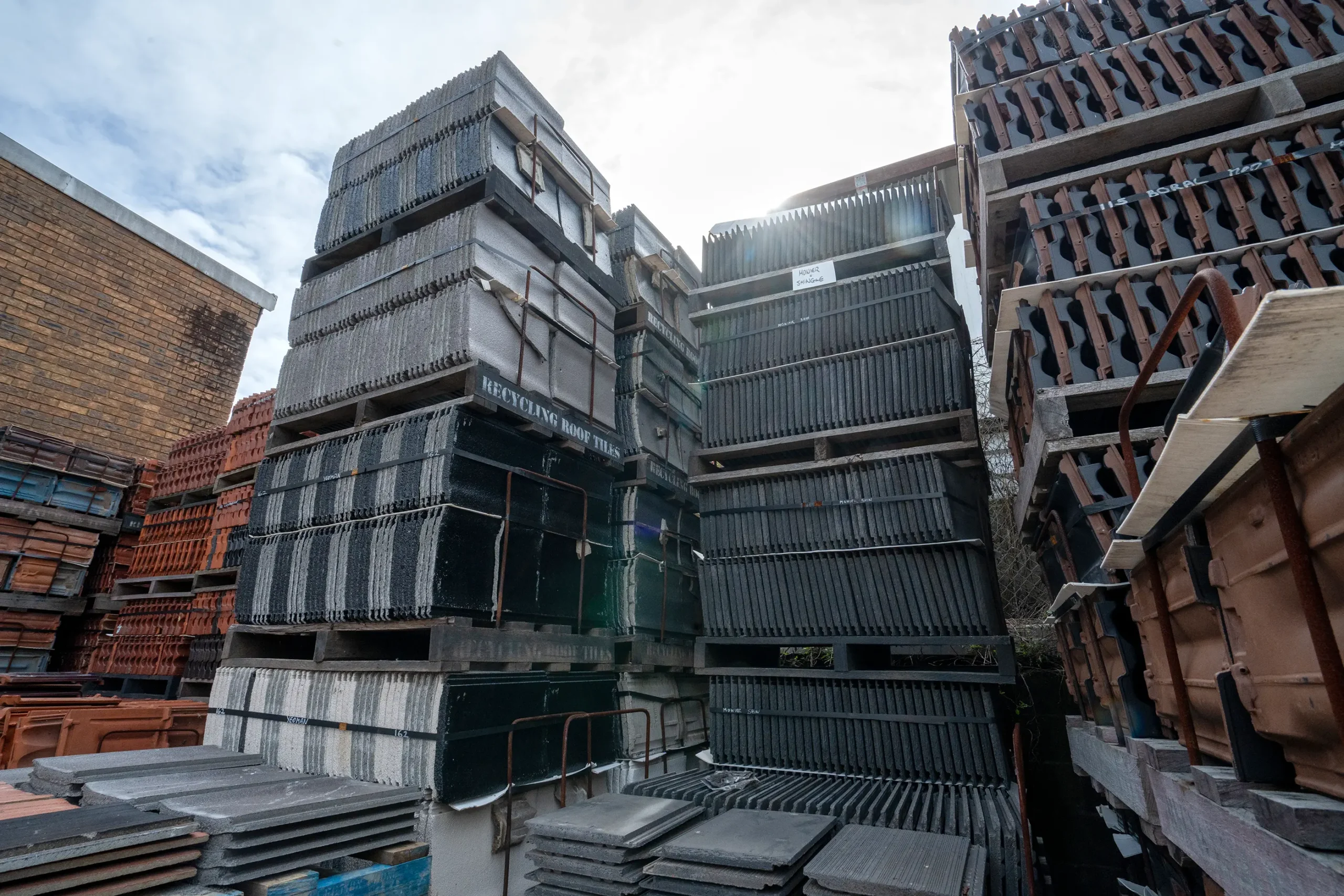
Keeping discontinued profiles sorted and in circulation allows a roofer to replace individual damaged tiles without automatically disturbing an otherwise serviceable roof.
What Happens During Roof Rebedding and Repointing?
The exact method depends on the roof and the extent of deterioration, but complete rebedding is a much more involved job than applying another layer of pointing over existing material.
A roofer will first assess the ridge caps, surrounding tiles and existing mortar. Where rebedding is necessary, affected ridge caps are lifted and deteriorated bedding is removed. The work area is then prepared so the caps can be reset correctly in new bedding.
Cracked field tiles or ridge caps should be identified and replaced rather than simply hidden beneath new mortar.
Once the bedding and ridge caps have been correctly established, the pointing system is applied to create the exposed finished joint.
Finally, the repaired ridge and surrounding roof areas should be checked for remaining loose material, damaged tiles and other visible defects.
What Should a Bedding and Pointing Quote Actually Tell You?
Two quotes for “roof repointing” can involve very different amounts of work.
One contractor may be allowing for preparation and repointing over stable existing bedding. Another may have allowed to lift and rebed deteriorated sections before pointing. Comparing only the final price can therefore be misleading.
A useful quote should make the repair scope reasonably clear.
Before comparing prices, establish:
- which ridge and hip lines are included;
- whether the work is repointing only, localised rebedding or broader rebedding;
- which pointing system is being used;
- how deteriorated existing material will be prepared or removed;
- whether damaged ridge caps and field tiles are included;
- whether replacement tiles are included or need to be sourced separately;
- what access and height-safety requirements are included; and
- whether removal and clean-up of failed mortar are part of the price.
Roof height, pitch, access, solar panels and complicated hip or valley arrangements can all affect the labour involved.
This is also why the floor area of the house alone is a poor way to understand the scope of bedding and pointing work. For this type of repair, the amount and condition of ridge and hip capping can be more relevant than the number of square metres inside the house.
Why a Professional Roof Assessment Matters
A homeowner can often spot obvious deterioration from the ground or notice mortar collecting in a gutter, but working on a tiled roof introduces fall risk and can create additional tile damage if it is walked incorrectly.
The more valuable question is not whether you can see a crack. It is whether the ridge caps remain stable, whether the bedding underneath still provides proper support, whether water entry is occurring and whether surrounding tiles have also been damaged.
A professional assessment can separate a relatively small repointing job from a ridge section that genuinely needs rebedding.
It can also prevent the opposite problem: removing sound ridge work unnecessarily when the defect is actually confined to a smaller area.
Roof Tile Bedding and Pointing FAQs
Can you repoint a roof without rebedding the ridge caps?
Yes. Repointing alone may be appropriate when the ridge caps remain firmly supported and the existing bedding underneath is sound. Deteriorated pointing can then be properly prepared before a new flexible pointing system is applied. If the bedding is crumbling, separating or allowing the ridge caps to move, the affected caps generally need to be lifted and rebedded first.
Can only part of a tiled roof be repointed?
Yes. Localised repair can be appropriate when deterioration is confined to a particular ridge or hip and surrounding areas remain sound. If cracking, loose mortar or movement is occurring across several sections of the roof, a broader assessment is more useful than repeatedly patching individual cracks.
Can cracked roof pointing cause leaks?
Cracked pointing can increase the opportunity for wind-driven rain to enter around a deteriorated ridge area, but it does not prove that the ridge is the only source of a leak. Valleys, flashings, broken tiles and other junctions can also admit water, and water can travel before becoming visible inside the house.
Does roof painting repair damaged bedding or pointing?
No. Roof paint is a coating system, not a structural repair for loose ridge caps, failed bedding or cracked tiles. Necessary tile replacement, bedding and pointing work should be completed before the roof coating system is applied.
How much does roof bedding and pointing repair cost?
There is no meaningful universal price because the repair scope varies considerably. Cost depends on how much ridge and hip capping requires work, whether the job involves pointing only or rebedding, roof height and pitch, access, safety requirements, the condition of surrounding tiles and whether damaged or discontinued tiles need to be sourced. Comparing quotes is easier when each contractor clearly states exactly which ridge sections and repair processes are included.
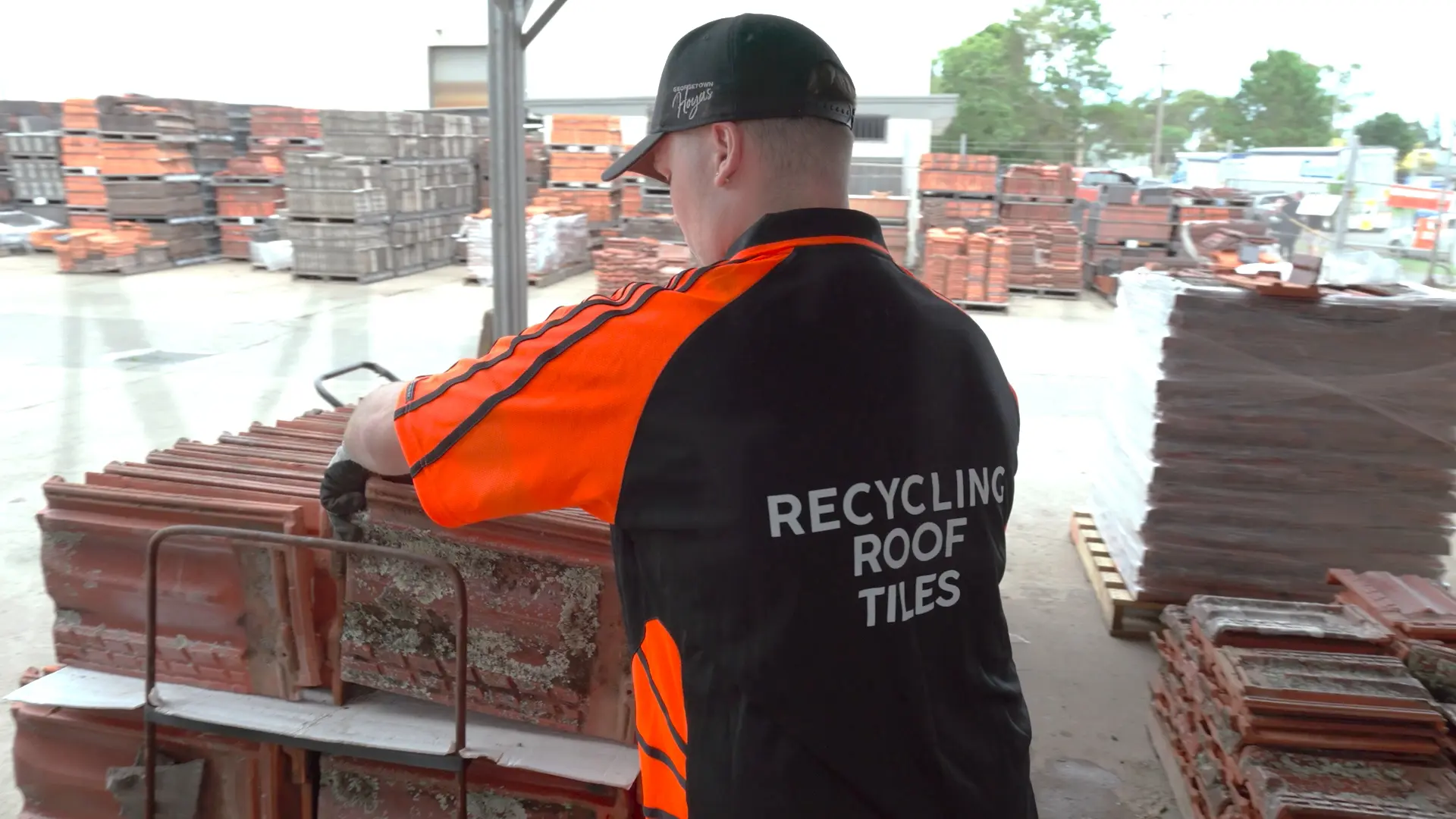
Reclaimed tiles are particularly useful where a repair needs only a small number of matching pieces from an older or discontinued profile.
REPAIRING AN OLDER TILED ROOF?
Identify the Damaged Tiles Before the Ridge Is Opened
If a roofer is going to lift and rebed older ridge caps, check whether there are cracked field tiles or damaged capping pieces in the same area. Older concrete and terracotta profiles may no longer be readily available through normal new-tile supply.
Recycling Roof Tiles supplies recycled roof tiles, ridge accessories, bedding materials, flexible pointing and other roofing supplies from our Doyalson yard.
If you do not know which tile you need, send us clear photographs of the top, underside, side profile and any manufacturer markings. Our team can help identify the profile and check whether suitable recycled stock is available.
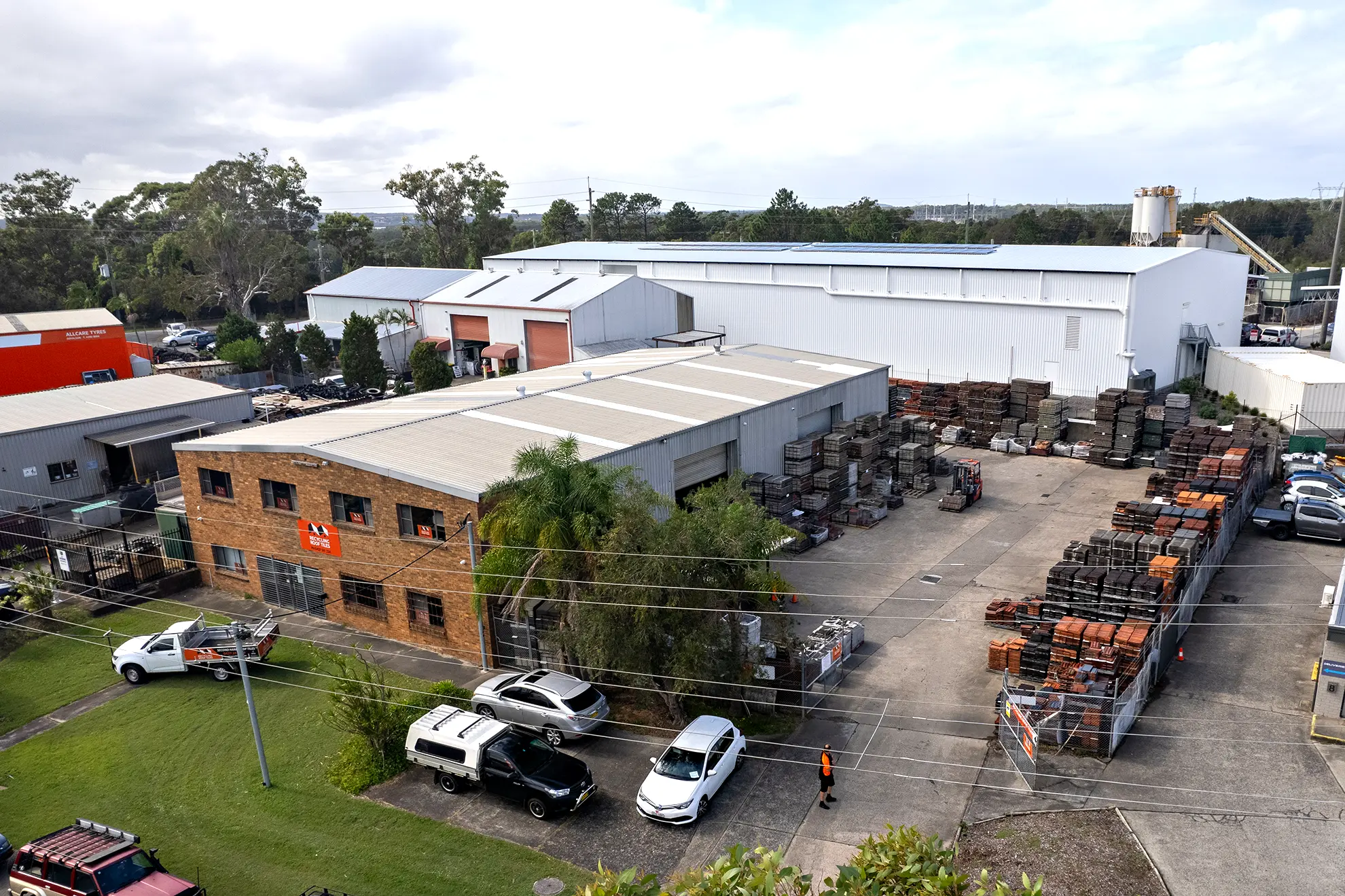
Recycling Roof Tiles carries recycled concrete and terracotta tiles and roofing accessories from its Doyalson yard, helping keep older profiles available for repair and restoration work.