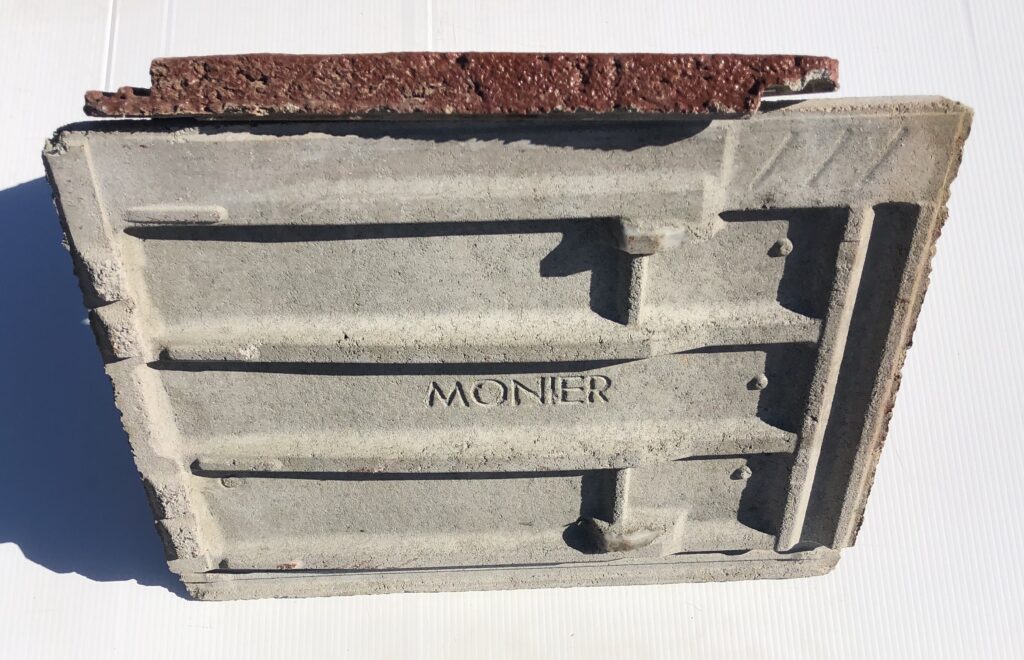
Found “Monier” stamped under a broken roof tile? The manufacturer is only the beginning.
Correctly matching an older Monier roof tile means identifying the exact profile and checking how it fits the existing roof. Two tiles can look remarkably similar from above yet use different sidelocks, water channels, nib positions or working dimensions.
About this guide: This resource was prepared by Recycling Roof Tiles in Doyalson, NSW, based on our day-to-day work identifying, matching and sourcing old, recycled and hard-to-find concrete and terracotta roof tiles. Learn more about Recycling Roof Tiles.
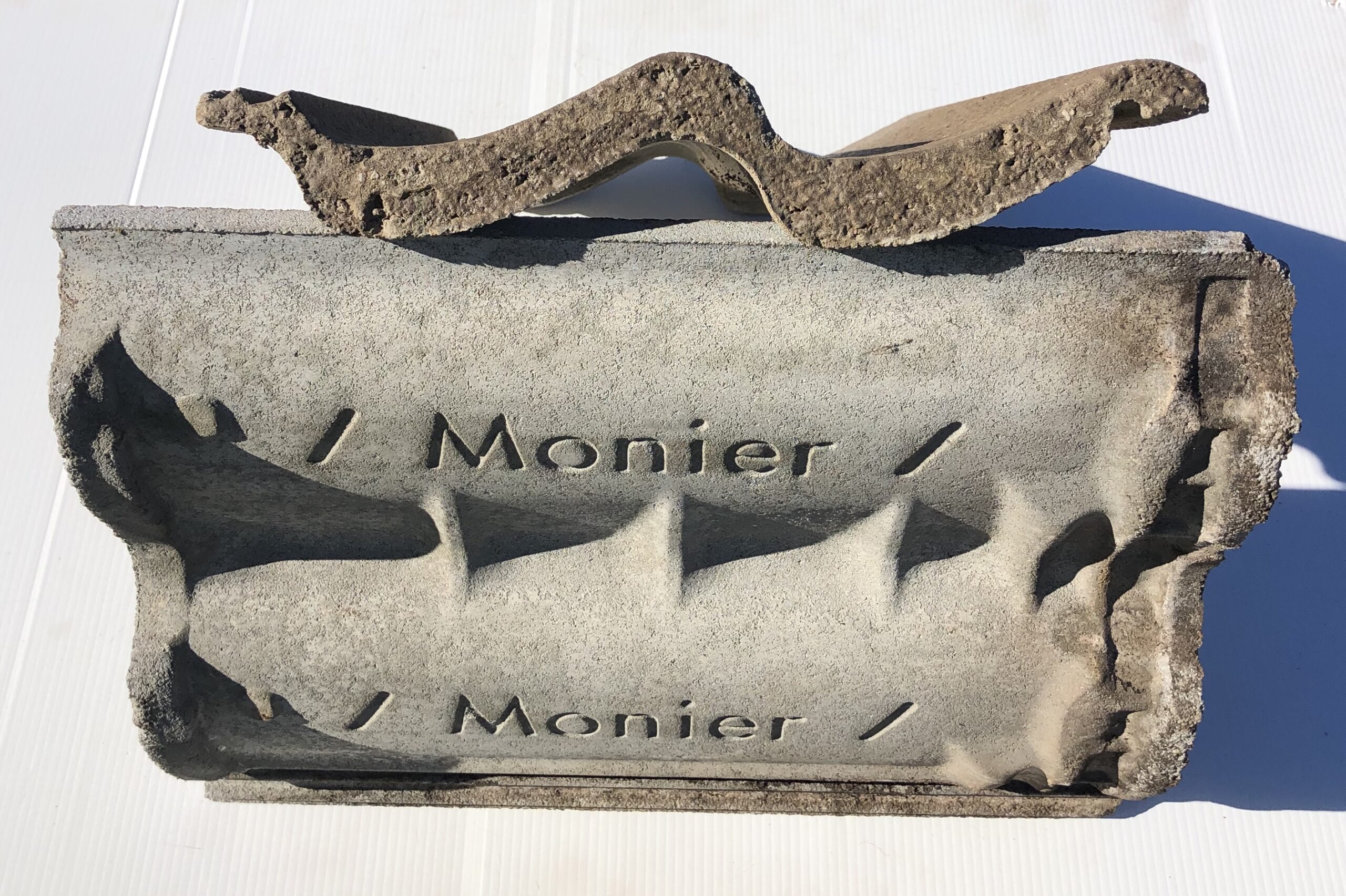
If you lift a broken roof tile and find Monier stamped into the underside, you have solved only half the problem.
Monier tiles have been installed on Australian homes for decades, so roofs across Sydney, the Central Coast, Newcastle, Lake Macquarie, Maitland and the Hunter can contain very different Monier profiles and manufacturing generations. Some profiles are still available as current products. Others are obsolete, discontinued or increasingly difficult to source through ordinary roofing suppliers.
That is why finding a replacement Monier roof tile is not simply a matter of buying another tile with Monier written underneath. The replacement must physically work with the tiles already installed on the roof.
When we identify an old Monier tile, we look beyond colour and branding to the characteristics that determine whether a tile will actually fit: the profile, sidelock, water channel, nib position, overall dimensions, effective cover width and the way it sits against neighbouring tiles.
Quick Answer: How Do You Identify a Discontinued Monier Roof Tile?
Start with the underside. Look for the Monier name, a profile name, numbers or moulded markings. Then compare the tile’s material, shape, overall dimensions, sidelock, water channel, nibs and effective cover width.
Do not identify an old Monier roof tile by colour alone. Two concrete tiles can look almost identical from the street but use different interlocks and may not be compatible.
Common older Monier names encountered when homeowners and roofers search for replacement roof tiles include Roman, Homestead or Traditional, Centurion, Monier 100, Elabana and Continental, along with various Monier and Wunderlich terracotta profiles including Marseille, Modern French and Swiss-style tiles.
There is an important qualification: old does not automatically mean discontinued. Some long-established Monier designs continue to be manufactured today. Others have changed generation, colour range or availability. That distinction matters when researching old Monier roof tiles online.
If you have an unknown tile rather than a confirmed Monier product, start with our guide to identifying old roof tiles in NSW. For rare profiles across multiple manufacturers, see our discontinued roof tiles guide.
Why Discontinued Monier Roof Tiles Can Be Difficult to Replace
A tiled roof is not simply a collection of independent slabs. Each field tile forms part of an overlapping drainage system. It sits on the roof battens, overlaps the course below and engages with the tiles beside it so rainwater is directed down the roof.
This is why a roof tile that is almost the same can still be the wrong replacement.
A slightly different surface colour is mainly an appearance issue. A different sidelock, water channel, cover width, nib location or headlap arrangement can affect how the tile actually performs.
From the tile yard: One of the most common mistakes is trying to identify a replacement from a photograph of the roof alone. The upper surface tells us something about the profile, but the underside often tells us much more. If you safely have a loose tile, photograph both sides before you start shopping.
Fit the wrong profile and the replacement may sit proud of the surrounding roof, rock on the battens, fail to engage properly with the neighbouring tile or create an inconsistent overlap.
For an older NSW roof, the best order is simple: identify the existing tile first, confirm physical compatibility second, then consider colour.
Old Monier Roof Tile Profiles You May Encounter in NSW
There is no single useful list covering every Monier tile ever installed in NSW. Product ranges have evolved over decades, roofs are repaired over time, and some older buildings contain a mixture of original tiles and replacement stock fitted during previous work.
The following are some of the profile names homeowners, roofers and builders commonly encounter when searching for old Monier roof tiles, second-hand Monier tiles and discontinued Monier replacement tiles.
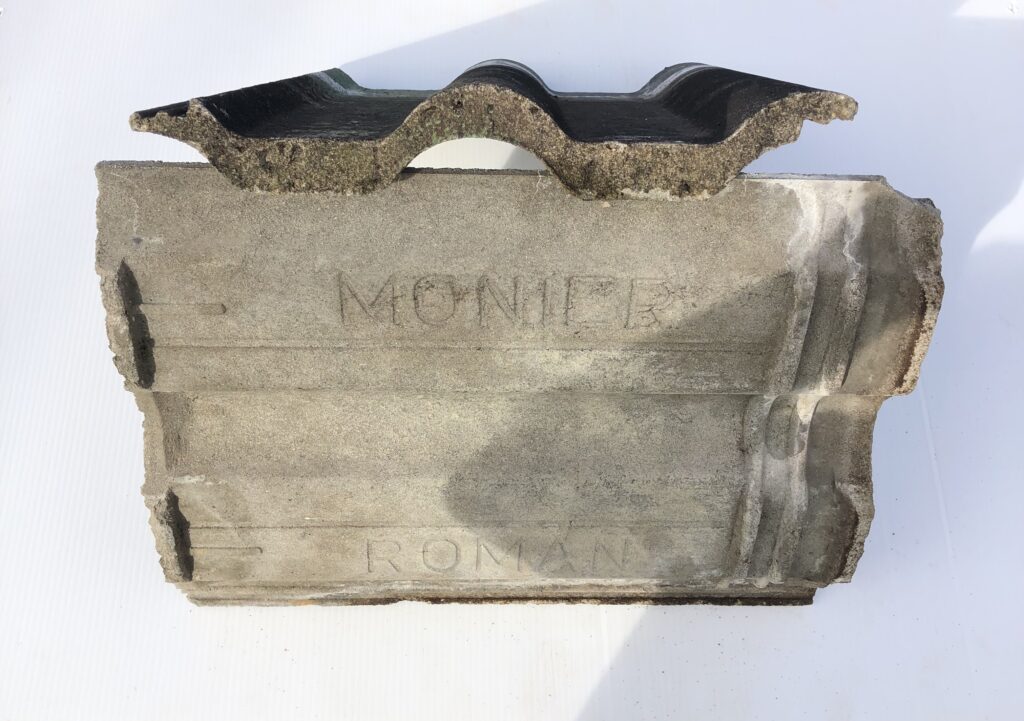
Monier Roman Roof Tiles
Monier Roman roof tiles are one of the important names to recognise when dealing with older concrete roofs. Roman-style tiles have a pronounced repeating wave compared with flatter or shingle-style profiles.
Searches for old Monier Roman roof tiles, Monier Roman replacement tiles and second-hand Monier Roman roof tiles often come from homeowners who need only a few tiles after localised damage. The challenge is that several curved concrete roof tile profiles can appear similar when viewed from above.
Do not assume another curved Monier tile is interchangeable. Manufacturing generation, dimensions, interlocking geometry and the existing roof layout all matter. When matching a Roman tile, we want to see the underside, the side engagement and the complete profile before confirming a replacement.
Monier Homestead and Traditional Roof Tiles
Monier Homestead is another name regularly encountered when owners of older Australian homes begin searching for replacement roof tiles. References to Homestead and Traditional can also appear together during profile research.
Homestead-type tiles have a relatively understated, lower-profile appearance compared with a pronounced Roman-style tile. Because the visible shape is less dramatic, homeowners sometimes assume another flat or semi-flat concrete roof tile will perform the same job.
It may not.
When looking for a Monier Homestead replacement roof tile, turn the tile over. Check the moulding, nib arrangement, sidelock, water channels and dimensions. Those characteristics are more useful than trying to match a faded surface colour from a photograph.
If you are searching for old Monier Homestead roof tiles in NSW or second-hand Monier Homestead tiles near you, specialist recycled stock is often the logical place to investigate before attempting to adapt an unrelated modern tile.
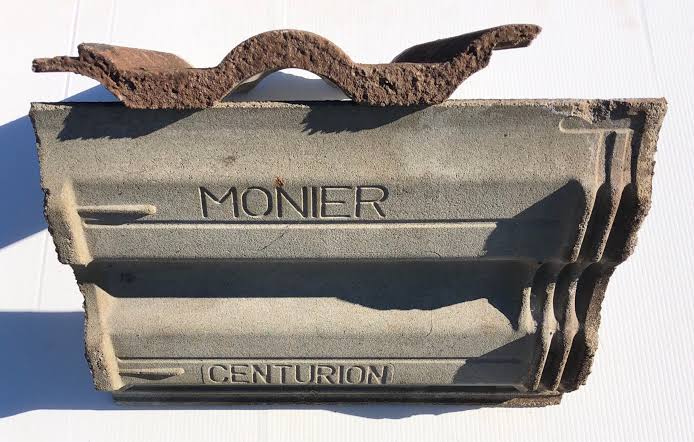
Monier Centurion Roof Tiles
Monier Centurion is a good example of why historical product information needs context. A profile name can exist across a long period while availability of an exact replacement changes over time.
The most useful question is therefore not simply, “Are Monier Centurion roof tiles discontinued?”
A better question is:
What exact Centurion tile is on this roof, and what physically compatible tile can replace it today?
When the appropriate generation of second-hand stock can be found, using the correct matching tile can be far more straightforward than attempting to infer compatibility from a newer product name.
Monier 100 Roof Tiles
Monier 100 is another older concrete roof tile name that can appear during tile identification.
Historical roof tile references sometimes connect similar profiles sold under different names or manufacturers, but those relationships should be treated as identification clues rather than automatic substitution instructions.
If the underside of your tile says Monier 100, photograph the entire back of the tile as well as every visible number, letter or moulded symbol. Measure its overall length and width too.
Those details can greatly reduce the number of possible replacement profiles.
Monier Elabana Roof Tiles: Old Does Not Mean Discontinued
Elabana deserves separate attention because it illustrates an important point: an old Monier roof tile is not necessarily a discontinued Monier roof tile.
Monier still lists Elabana within its Australian roof tile range. However, finding Elabana on an older tile does not mean a homeowner should automatically buy a new tile and assume it will be the ideal replacement.
Manufacturing period, roof layout, weathering, finish and the condition of the surrounding installation can all affect the real-world match. If a roof has been in place for decades and needs only one or two replacements, an appropriately matched reclaimed tile can sometimes be a practical solution.
This becomes particularly relevant after storms, tree impact, maintenance work or when roof tiles are broken during solar installation.
What About Current Monier Roof Tile Profiles?
A key part of accurate Monier roof tile identification is separating genuinely discontinued profiles from names that remain in production.
Monier’s current Australian range includes a number of concrete and terracotta profiles, including long-established names such as Elabana and Marseille as well as newer profile options.
That is why the term discontinued Monier roof tile should be used carefully. A tile can have been on a roof for decades while its broad profile name remains part of the current range.
Monier’s official Australian roof tile profile range is a useful manufacturer reference for checking which profiles Monier currently offers.
Important: A current profile name does not automatically mean an old and new tile are interchangeable. Even where Monier currently manufactures a tile carrying the same profile name, the existing roof and the actual replacement tile should still be checked before mixing stock.
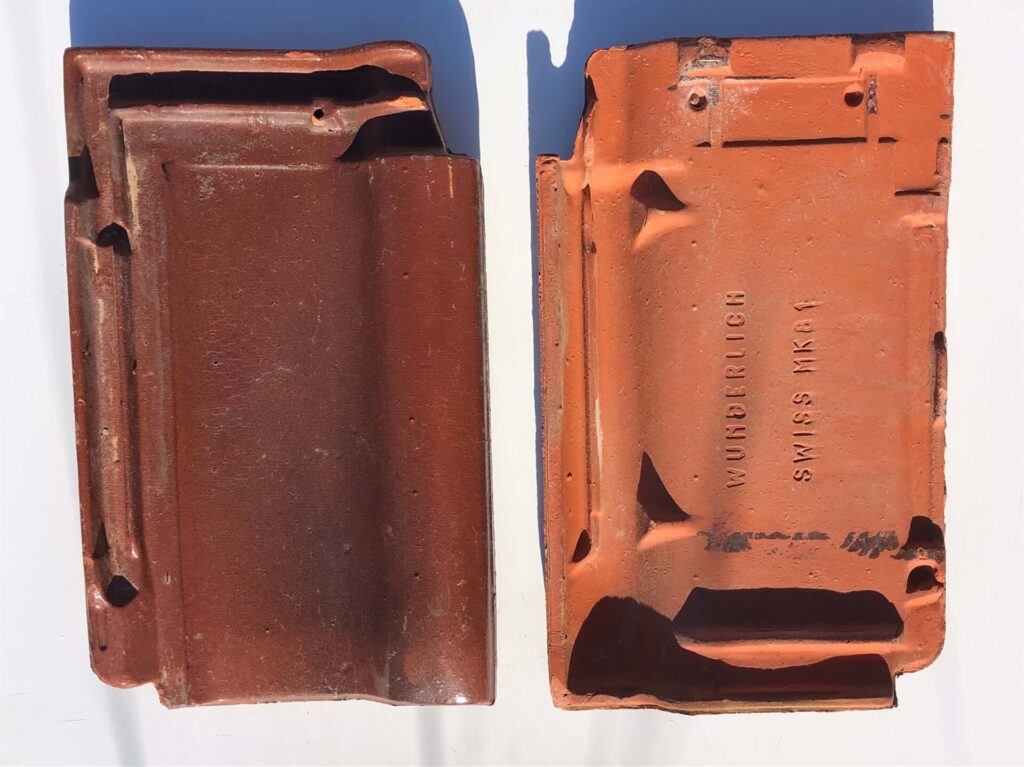
Monier Marseille, Wunderlich and Modern French Terracotta Tiles
Older terracotta roofs introduce another layer of terminology because homeowners may encounter Monier, Wunderlich or Monier Wunderlich names while researching Australian clay roof tiles.
Historical profile references can also contain names such as Modern French, Marseille and Swiss. This is one reason the wording stamped underneath an old terracotta tile does not always lead directly to a current product sitting on the shelf at a modern roofing supplier.
The good news is that sound terracotta roof tiles can remain in service for many decades. A hard-to-find or discontinued profile does not automatically mean an entire tiled roof needs to be replaced because several individual tiles have cracked.
Correctly matched reclaimed terracotta can allow an otherwise serviceable roof to remain in use.
Marseille itself is another example where terminology matters. Monier currently sells a Marseille terracotta profile, so a roof should not automatically be described as having discontinued Marseille tiles simply because it is old.
Older Monier and Wunderlich tiles, along with Marseille-pattern products from other manufacturing periods, can still have different dimensions or fitting characteristics. The actual roof tile should therefore be checked.
If you are unsure whether the tile is clay or concrete, see our information on terracotta roof tiles and cement roof tiles.
Monier Swiss and Continental Profiles
Swiss and Continental are other names that may appear when researching older Australian roof tile profiles. They demonstrate the limitation of identifying a tile from Google Images alone.
A photograph may suggest that your tile resembles a particular Monier profile. It cannot prove that the dimensions, interlock, nib position and batten relationship are correct.
With uncommon roof tile profiles, several physical characteristics should agree before a tile is treated as a suitable replacement.
How We Actually Match an Old Monier Roof Tile
Roof tile identification becomes much easier when you stop thinking about the tile as a colour and start treating it as a building component.
The first useful clue is often the underside marking. Monier may be moulded into the back of the tile, sometimes together with a profile name, number, code or another manufacturing mark. Even partial lettering can narrow the search.
We then consider the visible profile. Is the tile flat, low profile, Roman-style, double curved, shingle-like or French/Marseille patterned?
After that, the working geometry becomes more important.
The sidelock controls how neighbouring tiles engage. The water channel helps manage rainwater at the side overlap. The nibs help locate the tile at the roof batten.
We also consider overall dimensions, effective cover width and headlap. These are the details that can separate two tiles that appear almost identical when viewed from the ground.
For a deeper explanation of the process, see our guide to matching old roof tiles.
Why the Underside Is Often More Useful Than the Top
Homeowners naturally tend to photograph the visible face of a broken roof tile first. For identification, however, the underside can contain much more useful evidence.
It may reveal the manufacturer, profile markings, nib configuration, sidelock construction, water channels and mould characteristics that are hidden once the roof is installed.
If you have a spare tile in the garage, shed or under the house, use that as your sample rather than climbing onto the roof.
If accessing or removing a tile would require unsafe roof access, have a suitably experienced roofer or tradesperson obtain the sample. Identifying a replacement roof tile is not worth risking a fall.
What Photos Should You Send to Identify a Monier Tile?
If you want us to help identify an old Monier roof tile, a distant photograph of the house is rarely the best starting point. If you safely have access to a loose sample, send:
- A clear photograph of the complete top surface.
- A photograph of the full underside, not only the Monier stamp.
- A close-up of every moulded word, number, logo or symbol.
- A side-on photograph showing the height and shape of the profile.
- The tile’s overall length and width, preferably measured in millimetres.
- A photograph showing how the original tiles sit together on the roof.
- Your suburb and the approximate age of the house, if known.
Do not grind or aggressively clean an old tile simply to expose faint markings. Side lighting is often enough to make shallow moulded lettering easier to see in a photograph.
What If There Are No Markings on the Roof Tile?
An unmarked roof tile can still often be identified.
Manufacturers, factories, moulds and production periods differ, and markings may be shallow, worn or absent. In those cases, greater weight is placed on the dimensions, profile, sidelock, nib layout and water-channel geometry.
The location and approximate construction era of the house can also provide useful context, although neither should be used as the sole identification method.
This is one of the advantages of dealing with a specialist recycled roof tile supplier. An image search may tell you that your tile resembles a Monier Roman, Homestead or another profile. Comparing it against known tiles and stock provides much more information about whether it will actually fit.
Does the Colour of a Replacement Monier Tile Have to Match?
Not always. From a functional point of view, profile compatibility comes before colour.
A concrete roof tile that has been exposed to the NSW climate for 20, 30 or 40 years can look very different from the day it was manufactured. Surface coatings weather, dirt and lichen alter the appearance, and many older roofs have also been painted as part of previous restoration work.
Searching exclusively by an old Monier colour name can therefore distract from the more important task of finding the correct profile.
Where possible, a visually appropriate replacement is preferable. However, if the roof is going to be coated as part of a restoration or the replacement can be positioned in a less visible area, exact colour may be considerably less important than correct physical fit.
A practical option on some older roofs is to move a sound original tile from a less visible section of the roof to a prominent position, then install the compatible replacement in the less conspicuous location. Whether that is appropriate depends on the individual roof and the repair being carried out.
Can a New Monier Tile Replace a Discontinued Monier Tile?
Sometimes a newer roof tile can work in a particular repair, but never assume two tiles are interchangeable simply because both are made by Monier.
Compatibility is physical.
A possible substitute needs to be checked against the existing roof for factors including its dimensions, effective cover width, side engagement, water channel, nib position, headlap and the way the replacement sits within the surrounding course.
A new roof tile that looks close in a photograph can still sit incorrectly once it is fitted.
This is also why old renovation forums and social media posts should be treated carefully. A substitute that worked on one particular roof does not prove that every tile carrying the same broad profile description is compatible with every generation of that roof.
When the correct recycled profile is available, using a proper matching roof tile usually removes much of that uncertainty.
Why Recycled Monier Roof Tiles Matter for Older NSW Homes
Once a roof tile profile stops being manufactured, existing buildings become an important source of future replacement stock.
Tiles recovered carefully during demolition, renovation and reroofing can be identified, sorted and reused rather than automatically being treated as waste. This is one reason recycled roof tiles are so useful for maintaining established Australian tiled roofs.
A sound recycled roof tile of the correct profile can allow a roofer to repair localised damage without replacing an entire roofing system simply because a normal building supplier no longer stocks the original model.
This is particularly valuable across established housing areas of Sydney, Hornsby, the Central Coast, Gosford, Kincumber, Wyong, Newcastle, Lake Macquarie, Maitland, the Hunter Valley and Port Stephens, where homes may contain roof tile profiles that have not been readily available new for many years.
Sometimes the difference between a straightforward tiled roof repair and a much larger job is simply finding five tiles that actually match.
Using Second-Hand Monier Roof Tiles for Extensions and Renovations
Tile matching is not only about replacing storm-damaged roof tiles.
Extensions, second-storey additions, new valleys, skylights, solar installations and other alterations can all require extra tiles to connect new work into an established roof.
Installing a noticeably different profile alongside an older tiled roof can make an extension visually obvious and may also complicate the transition between the existing roof and new roofing work.
Where sufficient recycled stock can be sourced, retaining the existing profile can create a far more coherent result. This can be particularly useful on homes where the original tiled roof remains serviceable and there is no reason to remove the entire roof.
For renovation projects, it can also be sensible to obtain more matching tiles than the exact number currently required. Keeping a small reserve of a difficult-to-find roof tile profile can make future repairs considerably easier.
See our spare and replacement roof tiles NSW service if you need a small quantity of matching tiles or a larger batch for an extension or alteration.
Where Can You Buy Discontinued Monier Roof Tiles in NSW?
When the original Monier profile is no longer available through normal new-tile distribution, a specialist recycled roof tile supplier is usually the logical place to start.
General hardware stores and contemporary roofing suppliers understandably concentrate on products currently being manufactured. They are not normally holding decades of obsolete roof tile profiles for a homeowner who needs three replacement tiles from an older house.
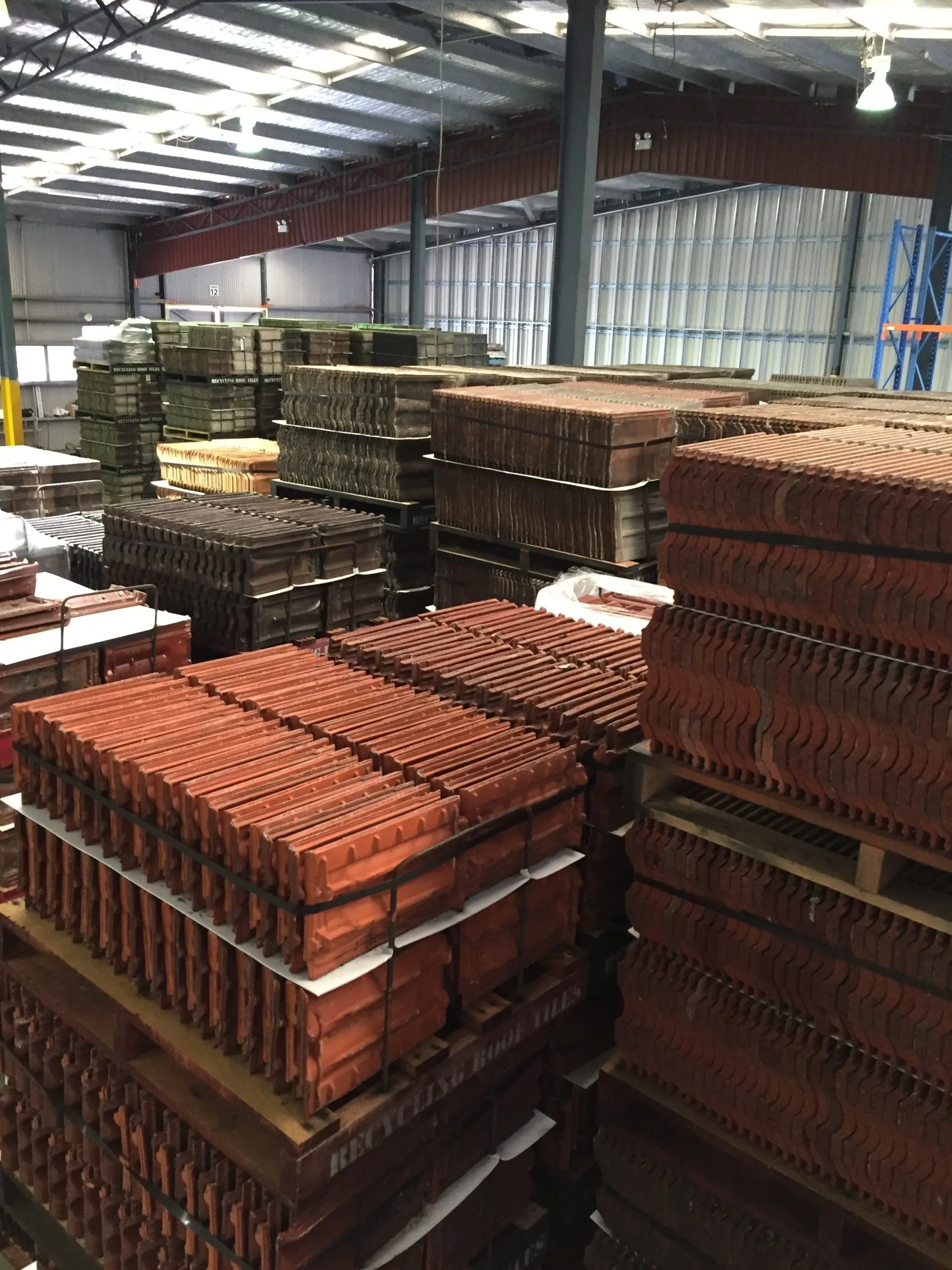
A roof tile recycling yard operates differently. Older tiles recovered from roofs can be identified and sorted so uncommon and discontinued profiles remain available for future repairs.
Recycling Roof Tiles supplies homeowners, roofers, builders, renovators and maintenance contractors looking for old, obsolete, discontinued and second-hand Monier roof tiles across NSW.
We regularly assist customers looking for roof tile matching in Sydney, customers throughout the Central Coast, and homeowners and contractors requiring roof tiles in Newcastle.
Because discontinued stock is recovered and sold over time, availability naturally changes. That is another reason to identify the exact tile before travelling to a supplier or ordering a batch.
Should You Replace the Whole Roof Because the Monier Tiles Are Discontinued?
Not simply because the profile is discontinued.
Discontinuation describes product availability. It does not, by itself, describe the condition of the roof.
If the roof structure is sound and the great majority of the roof tiles remain serviceable, sourcing matching replacement tiles may allow isolated damage to be repaired without reroofing the entire building.
A full reroof becomes a different discussion where tiles are failing across large areas, structural work is required, major alterations are planned or continuing to maintain an ageing roof is no longer practical.
Those circumstances are very different from a homeowner who has three cracked tiles after a branch falls onto the roof or several tiles are damaged during solar-panel installation.
“Discontinued” does not automatically mean “replace the roof”. First identify the profile and find out whether sound matching replacement stock exists.
Frequently Asked Questions About Discontinued Monier Roof Tiles
Are Monier roof tiles still made in Australia?
Monier continues to sell concrete and terracotta roof tile profiles in Australia. Its current range does not, however, contain every Monier profile, colour or historical manufacturing generation installed on Australian houses over previous decades. An older roof can therefore contain genuine Monier tiles that cannot simply be reordered as an identical new product.
Are Monier Homestead roof tiles discontinued?
Homestead is frequently encountered when people research older Monier roof tile profiles. If your tile is identified as Homestead or Traditional, have the actual profile checked before assuming another modern low-profile tile will fit. Matching recycled stock may be available depending on current supply.
Can I still buy Monier Roman roof tiles?
Older Monier Roman tiles can still appear in recycled roof tile stock even where the exact original product is no longer available through normal new-tile distribution. Send photographs of the upper surface, full underside and side profile, along with measurements, so the tile can be identified before stock is selected.
Is Monier Elabana discontinued?
No. Elabana remains part of Monier’s current Australian concrete roof tile range. An older Elabana roof should still be matched carefully rather than assuming any new tile carrying the Elabana name is automatically the ideal replacement for every existing installation.
Is Monier Marseille discontinued?
Monier currently sells a Marseille terracotta profile. Older Monier and Wunderlich terracotta tiles, and other Marseille-pattern roofs, can nevertheless require careful identification because similar appearance does not automatically prove that two roof tiles have identical dimensions or fitting geometry.
What is the difference between a roof tile profile and its colour?
The profile is the physical shape and fitting system of the roof tile, including features such as its curves, sidelock, water channels, nibs and working dimensions. Colour is the visible surface finish. A colour mismatch can be cosmetic. A profile mismatch can mean the replacement tile does not fit correctly.
Need Help Identifying an Old Monier Roof Tile?
If you have found Monier, Roman, Homestead, Traditional, Centurion, Monier 100, Elabana, Continental, Swiss, Modern French, Marseille, Wunderlich or another unfamiliar marking underneath a roof tile, send us photographs before buying something that only looks similar.
Recycling Roof Tiles specialises in identifying and sourcing old, second-hand and discontinued roof tiles throughout NSW. Send clear photographs of the top, underside, side profile and markings, together with the dimensions if possible. We can compare what you have with known roof tile profiles and current recycled stock.
Whether you need one replacement roof tile for a repair, spare tiles before solar installation, matching tiles for an extension or a larger quantity of a hard-to-find Monier profile, getting the identification right is the first step.