TECHNICAL REFERENCE GUIDE
Concrete tiles, terracotta tiles and metal roofing do not use the same coating system, and treating them as interchangeable is the single biggest cause of early coating failure. Each substrate has a different porosity, a different failure mode and a different primer chemistry it needs to bond correctly.
This guide sets out the actual technical differences between the three systems: what each primer is doing at a molecular level, what dry film thickness means for coating life, and which named products suit which substrate.
Most roof paint content treats “roof paint” as one product category. It is not. A primer engineered to bite into a chalky, alkaline concrete tile has a completely different job to a primer designed to bond to a glazed terracotta surface, and neither will work correctly on a factory-finished Colorbond sheet.
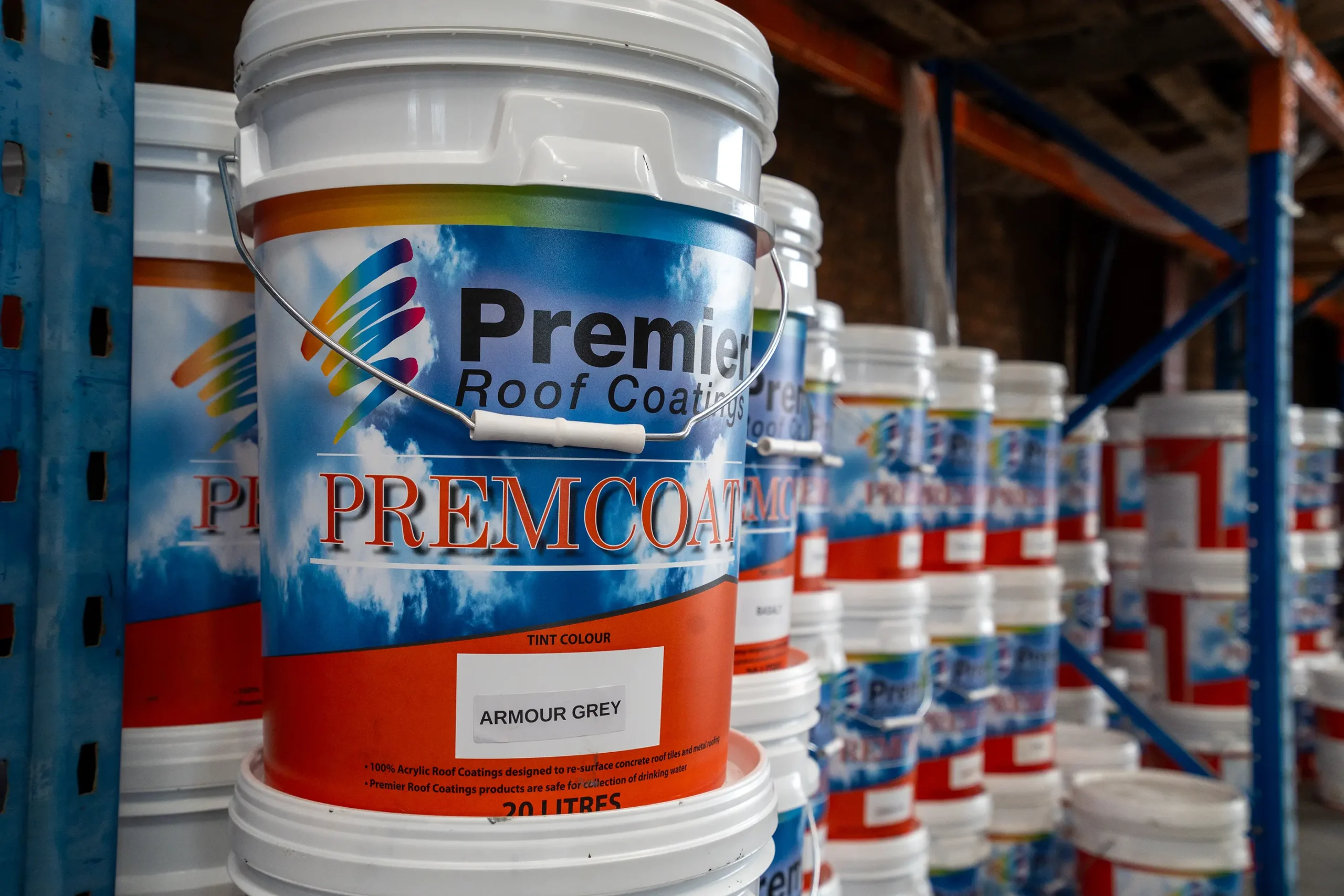
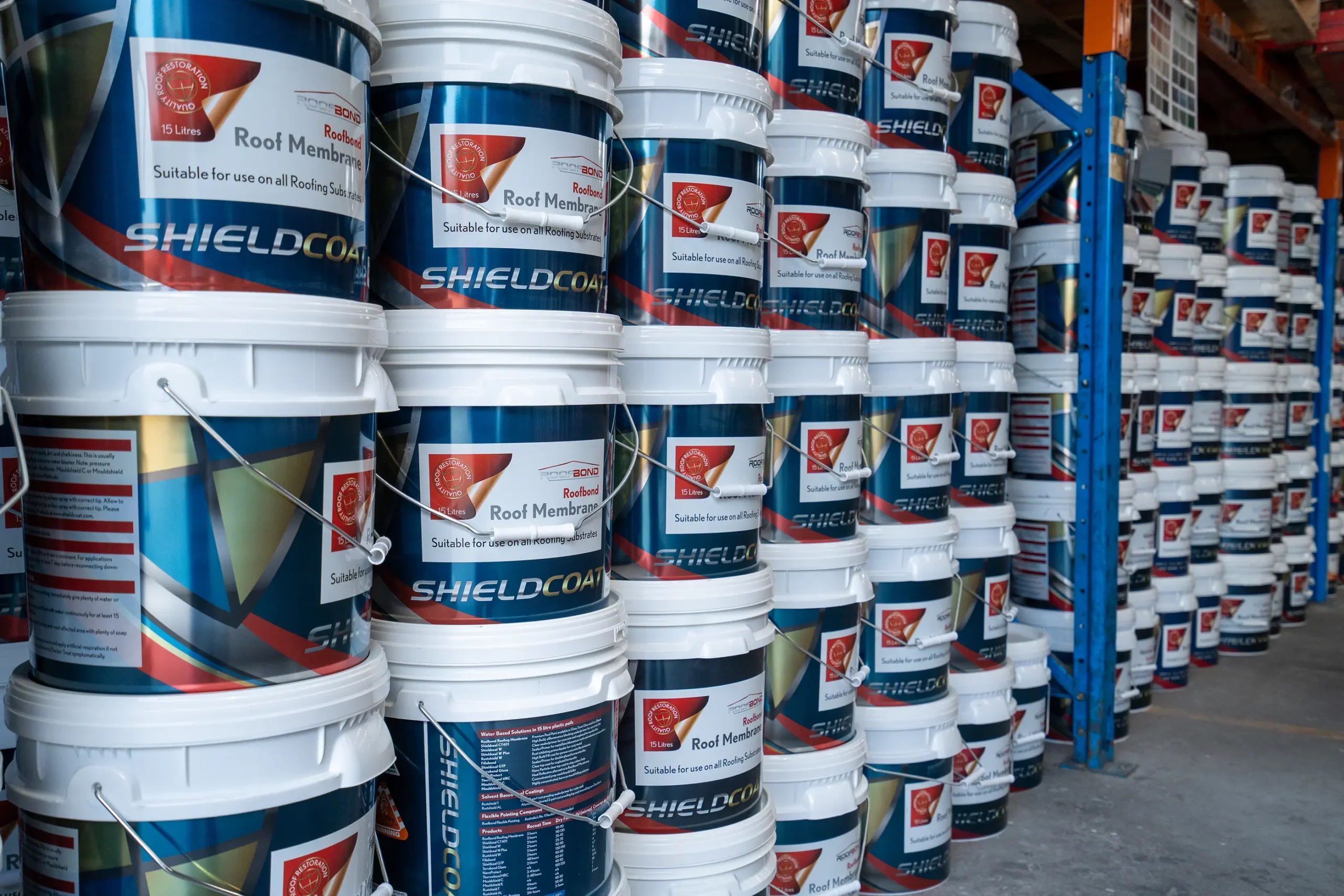
Recycling Roof Tiles stocks roof paint, primers, sealers and membranes from Premier Roof Coatings, Shieldcoat and Globalcote across NSW. This guide is a reference for choosing the correct system by substrate, not a cost guide. For pricing, see our roof tile painting cost guide.
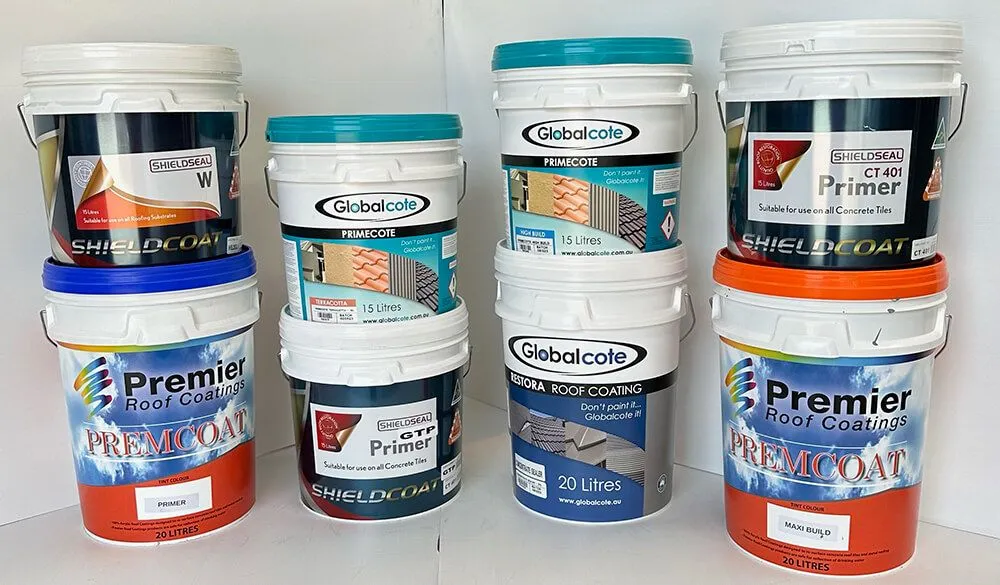
Primer chemistry, not topcoat colour, is what actually determines whether a coating system bonds to a given substrate.
QUICK ANSWER
What Is the Difference Between Roof Paint Types?
Concrete tile coatings are acrylic membrane systems built to seal a porous, alkaline surface, typically an acrylic sealer or primer followed by a high-build acrylic membrane at 2 to 3 coats.
Terracotta tile coatings need a specialist adhesion-promoting primer, since glazed terracotta resists standard acrylic bonding; unglazed terracotta behaves more like concrete but is more porous again.
Metal roof coatings use a completely different chemistry: an etch or rust-inhibiting primer with zinc phosphate or styrene acrylic bonding agents, designed to key onto a factory-finished or bare metal surface rather than seal a porous one.
Why Roof Coatings Are Systems, Not Products
A roof coating is not a single tin of paint. It is a system: a primer or sealer, a membrane or topcoat, and sometimes a separate pointing compound for ridge capping, all chemically matched to work together. Mixing components from different systems, using a concrete primer under a metal-rated topcoat, for example, can prevent the layers from bonding correctly.
Coating manufacturers formulate these systems around two properties in particular: dry film thickness (DFT) and substrate-specific adhesion.
Dry Film Thickness (DFT): The Spec Most Homeowners Never See
Acrylic roof membranes are applied far thicker than ordinary house paint. Exterior house paint typically dries to a film around 70 microns thick. A roof membrane coating is designed to cure at 500 to 1000 microns, five to ten times thicker, because it is not just adding colour, it is forming a seamless, flexible, UV-resistant layer over the whole roof.
This matters because DFT is directly tied to service life. A coating applied too thinly, over-thinned to stretch further, or rolled on in a single light coat, will not achieve its rated UV blocking or crack-bridging capacity, even if the product itself is a premium one. This is one reason reputable systems specify two full coats over a primer rather than a single heavier coat: film build accumulates more reliably in two passes.
Why this matters when comparing quotes: two roofers offering “the same brand” of coating can still deliver very different film thickness depending on application method and number of coats. The brand name on the tin does not guarantee the cured film meets its rated spec.
Concrete Tile Coating Systems
Concrete roof tiles are cement-based, porous, and mildly alkaline, particularly when new or freshly cleaned back to bare concrete. Over time, UV and weathering cause the surface to chalk, meaning fine cement particles break away from the surface, which is why an aged concrete roof leaves a dusty residue when rubbed.
What a concrete coating system needs to do:
- seal the porous surface so the topcoat does not soak in unevenly
- bind any chalking or loose surface material so the topcoat has something stable to adhere to
- tolerate mild alkalinity without the coating breaking down through saponification
- flex with the tile’s thermal expansion and contraction without cracking
Typical system structure: a penetrating acrylic sealer or primer, such as Premcoat Primer or Premcoat Maxi Build Sealer for heavily pitted or porous tiles, followed by two coats of an acrylic roof membrane such as Premcoat Roof Coating or a Roofbond membrane system. Where the tile has previously been painted and shows chalking or fading from calcium salts leaching through, Shieldcoat’s Shieldseal CT401 is formulated specifically to resist that leaching and improve colour retention over time.
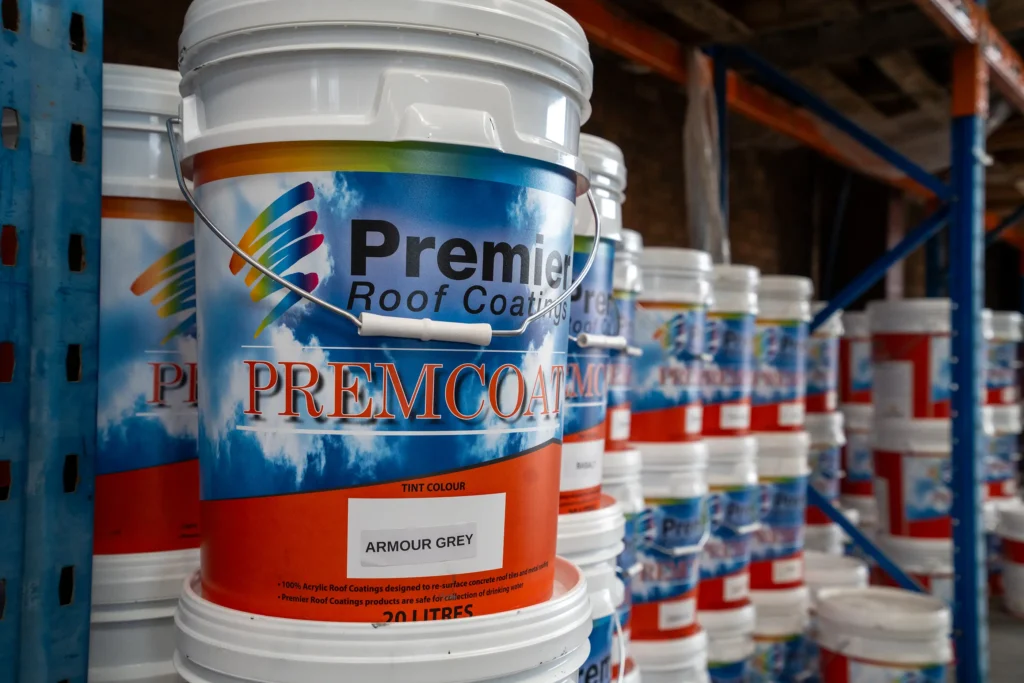
Acrylic membrane coatings for concrete tiles are applied at 500 to 1000 microns dry film thickness, five to ten times thicker than standard exterior house paint.
Not sure whether your concrete tiles are chalking, porous or just dirty? A close-up photo usually tells us which primer the job actually needs.
Send a PhotoTerracotta Tile Coating Systems
Terracotta is fired clay, not cement, and its coating behaviour depends heavily on whether the surface is glazed or unglazed.
Unglazed terracotta is more porous than concrete and generally accepts a coating system in a similar way, provided the correct sealer is used to control absorption. Glazed terracotta is a different problem entirely. The glaze is a fired ceramic surface, smooth and largely non-porous by design, which is exactly what makes standard acrylic primers struggle to bond to it. A primer that works perfectly on concrete can peel off glazed terracotta within a season.
This is where a purpose-built adhesion-promoting primer matters more than on any other substrate. Shieldcoat’s Shieldseal GTP (Glazed Terracotta Primer) is formulated with adhesion promoters specifically to bond to both glazed and unglazed terracotta surfaces. It typically requires a 24 to 48 hour cure window to build full adhesion strength before a topcoat goes over it, longer than a standard concrete primer, because the bonding mechanism is doing more work at the surface level.
| Surface | Adhesion challenge | Primer approach needed |
|---|---|---|
| Unglazed terracotta | High porosity, uneven absorption | Penetrating sealer, similar family to concrete primers |
| Glazed terracotta | Smooth, low-porosity fired surface resists standard bonding | Dedicated adhesion-promoting primer, longer cure time |
| Old, weathered glazed terracotta | Partial glaze breakdown, inconsistent surface | Test patch recommended before committing to a full coating system |
Because of this adhesion risk, not every terracotta roof is a good candidate for coating. If a test patch shows poor adhesion even with a proper primer, that is a signal the roof may not be suitable for a coating system at all, regardless of product choice. For a broader look at the cost implications of terracotta versus concrete coating, see our painting cost guide. If you are dealing with a roof that has failed tiles as well as a coating decision, our terracotta roof tiles range covers matching and replacement stock.
Metal Roof Coating Systems
Metal roofing, including Colorbond, Zincalume and older galvanised iron, is a completely different coating problem to tile. There is no porosity to seal. Instead, the challenge is bonding a new coating to a smooth, factory-finished or bare metal surface, and managing corrosion if any is present.
Colorbond specifically leaves the factory with a multi-layer system: a Zincalume metallic base, a conversion coating, a primer, and a baked-on Thermatech topcoat, cured at high temperature to form a molecular bond with the steel. That factory finish typically carries a 15-year warranty against peeling, cracking and chipping under normal conditions. Painting over Colorbond means bonding a new coating to that factory finish, which is why standard acrylic tile primers do not work here: they are not designed to key onto a baked-on factory coating.
Two primer categories for metal roofs:
- No rust present: a styrene acrylic metal primer, such as Premcoat Metal Primer, formulated for etching and adhesion onto Colorbond or other metal roofing sheets without rust treatment being required first.
- Surface rust present: a rust-inhibiting primer containing zinc phosphate or a similar anti-corrosive agent, such as Shieldcoat’s Rustshield W, a water-based acrylic anti-rust sealer/primer. These primers work by displacing oxygen and moisture at the surface, the two elements that drive ongoing corrosion, and act as a sacrificial layer similar in principle to the zinc coating in Zincalume itself. A rust primer will not reverse existing corrosion damage, only slow its spread and provide a stable surface for the topcoat.
For chalky or previously unpainted metal roofing, Shieldcoat’s Shieldseal W Plus is formulated as a thin tack-coat primer to improve adhesion before a membrane topcoat such as Roofbond Roof Membrane is applied. For roofs where reducing roof cavity heat is the priority alongside protection, Thermobond Heat Reflective Roof Membrane is engineered around solar reflectivity and high heat emissivity rather than simply providing a protective film.
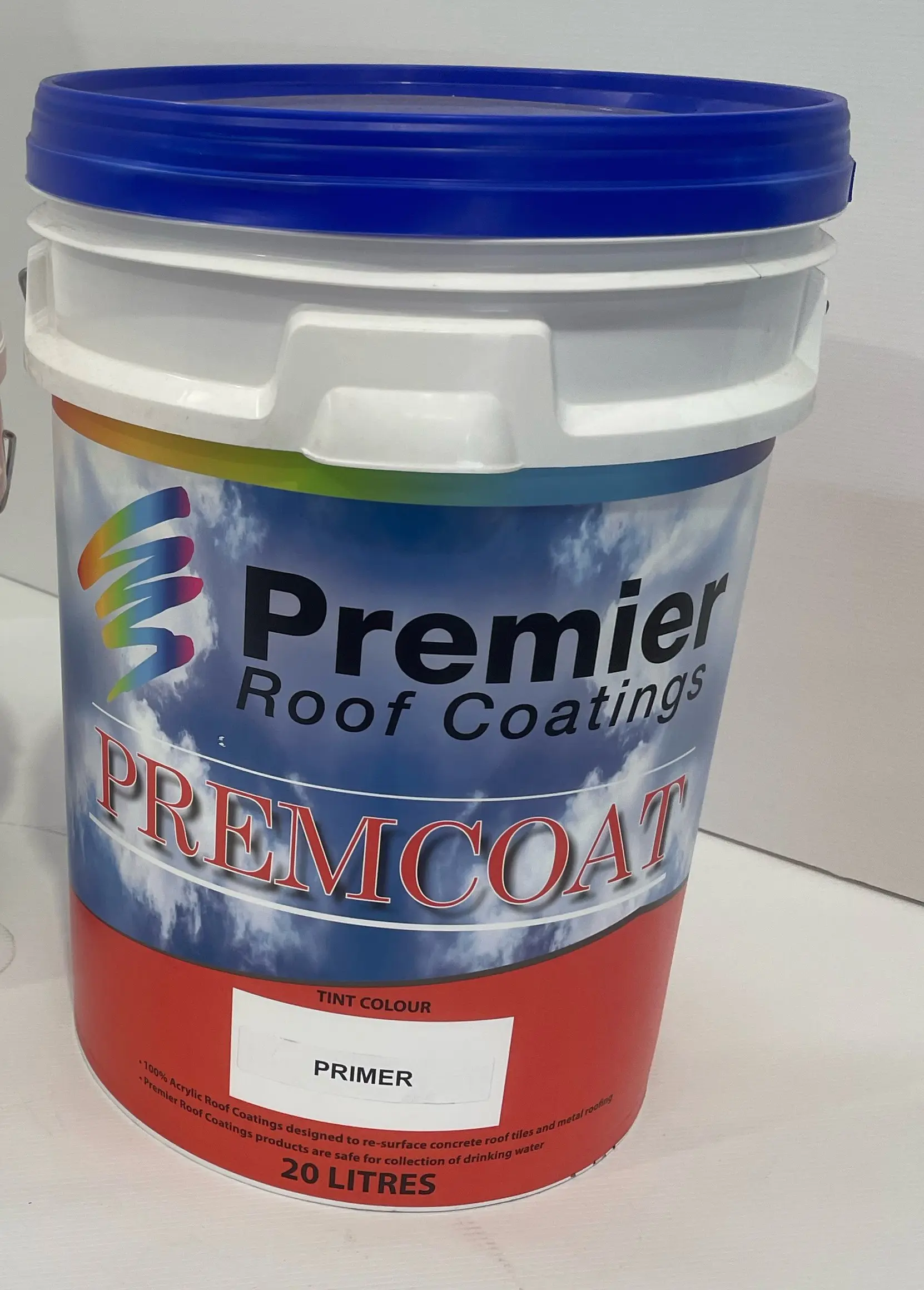
Metal roof primers work by mechanical adhesion and, where rust is present, chemical rust inhibition, not by sealing porosity the way a concrete or terracotta primer does.
Unsure whether your metal roof needs a rust-inhibiting primer or a standard etch primer? Send us a photo of the surface and we’ll tell you which system applies.
Ask Which Primer You NeedCoating Types Compared, Side by Side
| Substrate | Main challenge | Primer chemistry | Typical system |
|---|---|---|---|
| Concrete tile | Porosity, chalking, mild alkalinity | Penetrating acrylic sealer/primer | Primer + 2 coats acrylic membrane |
| Unglazed terracotta | High porosity | Penetrating sealer, concrete-family | Primer + 2 coats acrylic membrane |
| Glazed terracotta | Low porosity, poor standard adhesion | Adhesion-promoting primer (e.g. Shieldseal GTP) | Extended cure primer + membrane, test patch advised |
| Metal, no rust | Bonding to factory finish | Styrene acrylic etch/tack primer | Metal primer + acrylic topcoat |
| Metal, surface rust present | Active corrosion | Rust-inhibiting primer with zinc phosphate | Rust primer + acrylic topcoat |
Solar Absorptance, Reflectance and Why the Colour You Choose Is a Technical Decision
Colour choice is not purely aesthetic. Two properties determine how a roof behaves thermally once coated: solar absorptance (SA), the proportion of incoming solar radiation the surface absorbs, expressed as a value between 0 and 1; and the Solar Reflectance Index (SRI), which combines reflectance and thermal emittance into a single comparative rating.
These are not marketing terms. BlueScope measures Colorbond’s solar absorptance values under ASTM E903-96, the standard test method for solar absorptance, reflectance and transmittance using integrating spheres, and the National Construction Code uses solar absorptance thresholds to classify roofing materials for commercial and industrial buildings. A lower SA value means less heat absorbed and, generally, a cooler roof cavity on a hot day.
This applies to tile coatings as much as factory-finished metal. A dark acrylic membrane on a concrete tile roof absorbs more heat than a light one, which can accelerate coating fatigue over time in addition to affecting the temperature of the roof space below. For the fuller picture on how this interacts with roof colour choice in NSW conditions, see our guide to roof colour and solar absorptance in NSW.
Pointing and Ridge Capping: The System Most Guides Skip
Ridge and hip capping is finished separately from the field tile coating, using a flexible pointing compound rather than a rigid mortar-only approach. Flexipoint is a water-based polymer pointing compound designed to retain flexibility after curing, so it can move with the roof rather than cracking the way traditional cement mortar does. Selleys Point Works is a similar flexible, pre-coloured pointing product used across the same ridge and hip lines.
Pointing is chemically separate from the field coating system, but it is applied as part of the same overall job, and it should always be completed before the field coating, not after, so any mortar dust or debris from the pointing work does not contaminate a freshly coated surface. For the full sequencing logic, and when a roof needs rebedding rather than just repointing, see our guide to roof tile bedding and pointing.
Product Reference by Substrate
Concrete tiles
- Premcoat Primer or Premcoat Maxi Build Sealer (porous/pitted surfaces)
- Shieldseal CT401 (fade-resistant, blocks calcium salt leaching)
- Premcoat Roof Coating or Roofbond acrylic membrane (topcoat)
Terracotta tiles
- Shieldseal GTP (glazed and unglazed terracotta, adhesion-promoting)
- Standard acrylic membrane topcoat once primer has cured
Metal roofing (Colorbond, Zincalume, galvanised iron)
- Premcoat Metal Primer (no rust present)
- Rustshield W (surface rust present, water-based anti-rust primer)
- Shieldseal W Plus (chalky or previously unpainted metal, tack coat)
- Roofbond Roof Membrane or Thermobond HRC (topcoat, including heat-reflective option)
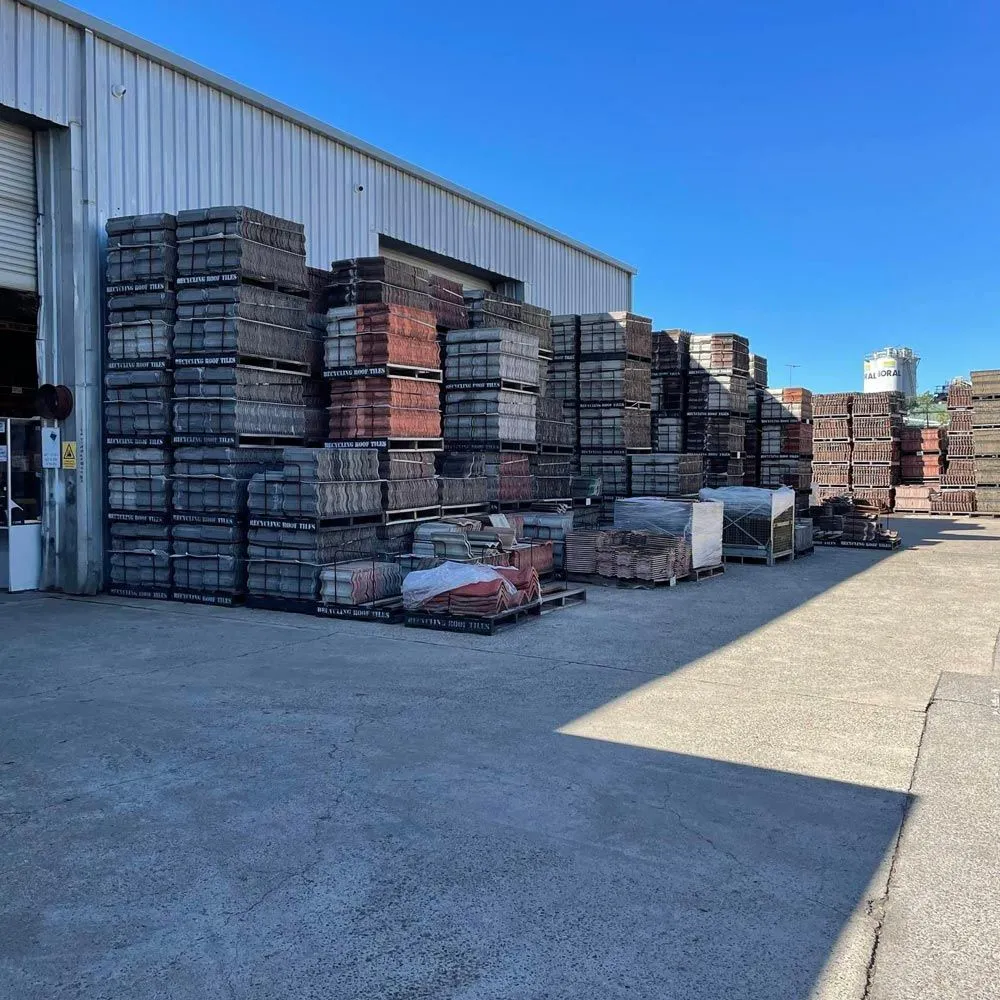
Recycling Roof Tiles supplies each of these systems from our Doyalson yard, alongside recycled cement tiles and terracotta tiles for any repairs needed before coating begins.
Roof Paint Types FAQs
Can I use the same roof paint on tile and metal sections of the same roof?
No, not with the same primer. The topcoat membrane may be compatible with both substrates in some product ranges, but the primer underneath needs to be substrate-specific: an acrylic sealer for tile, an etch or rust-inhibiting primer for metal. Using a tile primer on metal, or a metal primer on tile, is a common cause of early adhesion failure.
Why does glazed terracotta need a different primer to unglazed terracotta?
Glazed terracotta has a fired ceramic surface that is largely non-porous, so standard acrylic primers designed to penetrate a porous surface have little to bond to. A dedicated adhesion-promoting primer is formulated to bond mechanically and chemically to that smooth glazed surface instead of relying on penetration.
What does dry film thickness mean and why does it matter?
Dry film thickness (DFT) is how thick the cured coating layer is once it has dried, measured in microns. Roof membrane coatings are engineered to cure at 500 to 1000 microns, far thicker than standard house paint, because that thickness is what provides UV resistance and the ability to bridge minor surface cracks. A coating applied too thinly will not meet its rated performance even if it is a premium product.
Does a rust primer fix existing rust on a metal roof?
No. A rust-inhibiting primer slows the spread of existing corrosion and provides a stable surface for the topcoat, but it does not repair or reverse rust damage already present. Heavily corroded sections may need mechanical treatment or replacement before a coating system is applied.
Is solar absorptance only relevant to metal roofs?
No. Solar absorptance applies to any roof colour and material, including painted concrete and terracotta tiles. A darker coating colour absorbs more heat regardless of what is underneath it, which affects both roof cavity temperature and, over time, how hard the coating itself has to work to withstand thermal cycling.
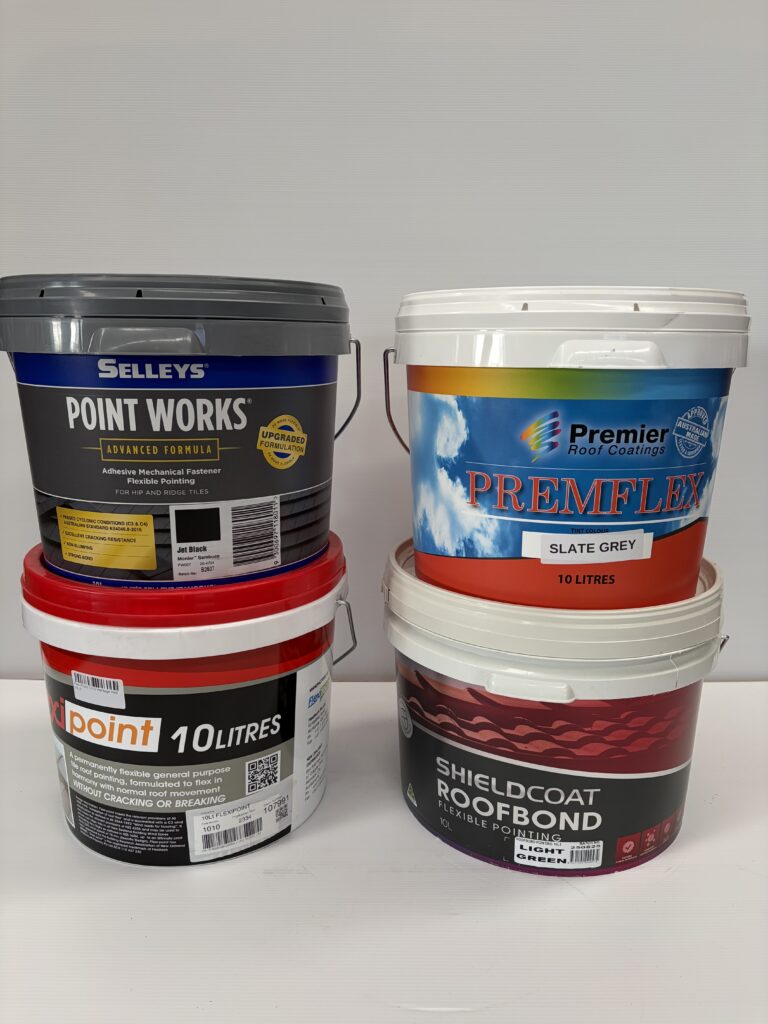
Ridge and hip pointing uses a separate flexible compound, chemically distinct from the field tile coating system.
NOT SURE WHICH SYSTEM YOUR ROOF NEEDS?
Get the Right Primer and Topcoat Matched to Your Substrate
Recycling Roof Tiles stocks Premier Roof Coatings, Shieldcoat and Globalcote systems for concrete, terracotta and metal roofs across Sydney, Newcastle and the Central Coast. Send us photos of the roof surface and we’ll confirm which primer and topcoat combination applies before you buy.
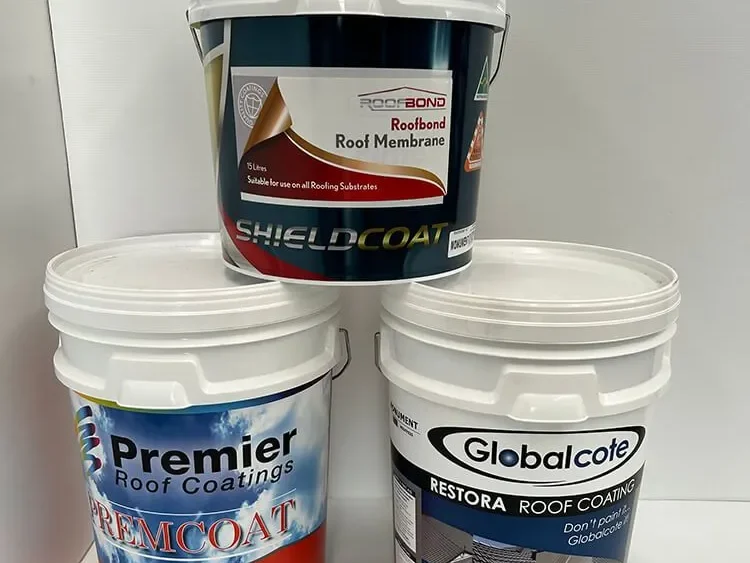
Recycling Roof Tiles stocks Premier Roof Coatings, Shieldcoat and Globalcote systems matched to concrete, terracotta and metal roof substrates.