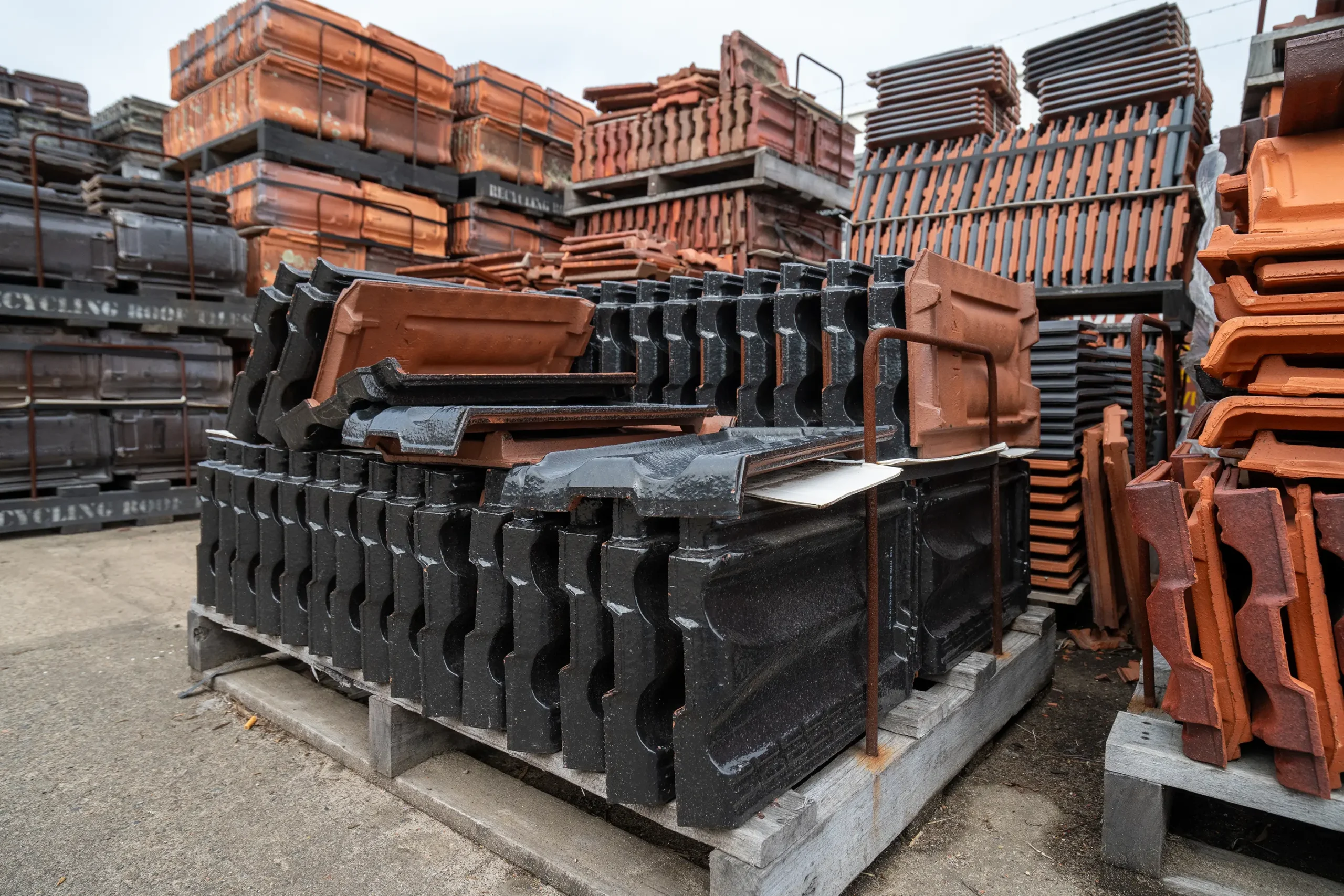
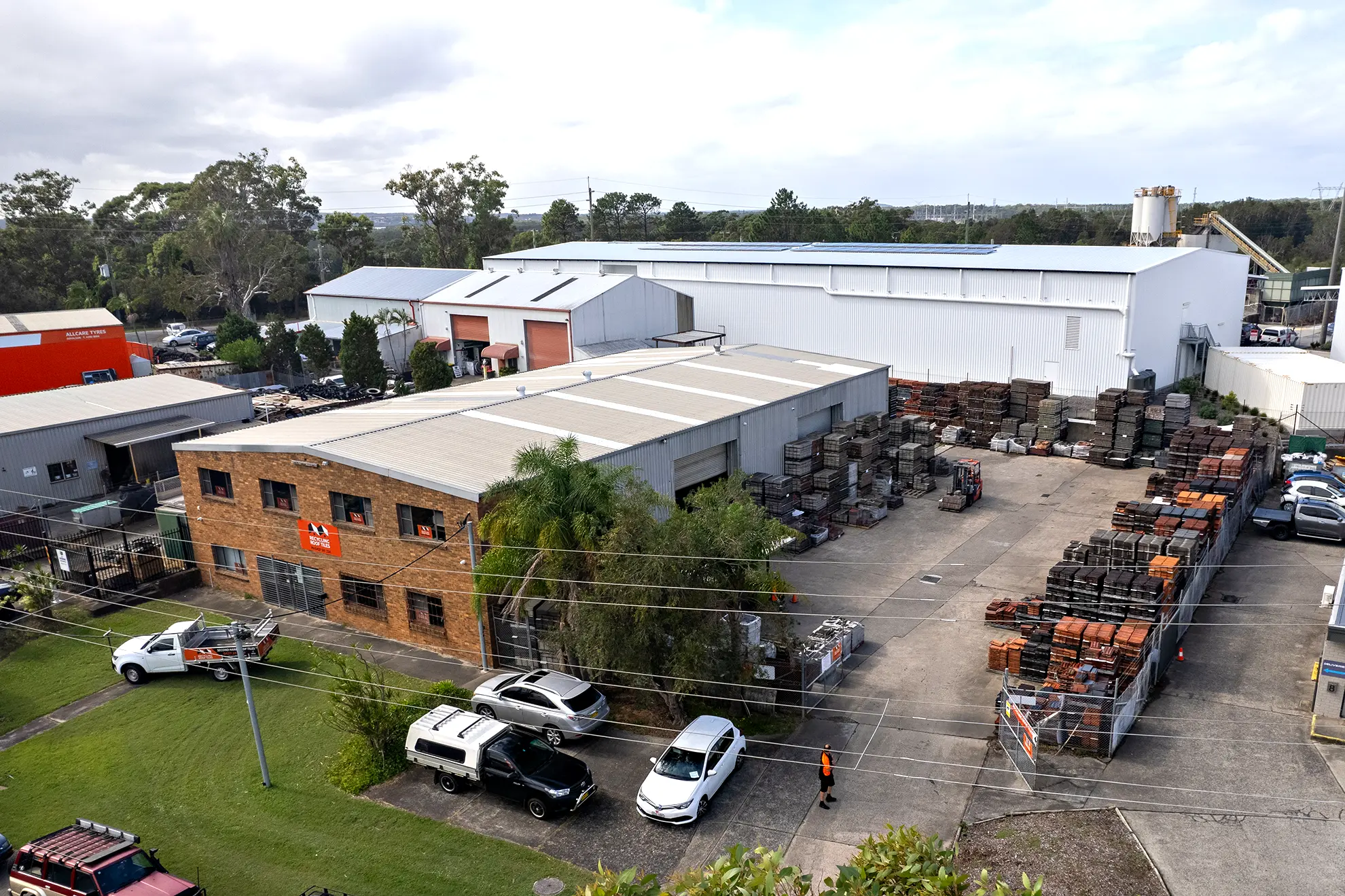
A tile roof is only as watertight as the bits between the tiles. Ridges are held by bedding and pointing, walls and chimneys are sealed with flashing, and valleys are kept clear with guard. Recycling Roof Tiles stocks those accessories next to recycled concrete and terracotta tiles, so a roof tiler can pick up the matching tiles, caps and everything that goes with them in one 5:30 am stop.
It is the advantage of buying from a tile yard rather than a hardware chain. We can see your tile, tell you which cap fits it, and hand you the bedding, pointing and flashing for the job on the same docket. For our tile ranges, see recycled cement tiles and recycled terracotta tiles.

Fact-checked November 2026 · Rated 4.8★ from 48+ Google reviews
5:30 am
Trade pick-up, Monday to Friday
1 docket
Matching tiles, caps and accessories together
≈22 m
Of ridge pointed per 10 L pail of flexible pointing (manufacturer figure)
≈3 m
Of ridge bedded per 20 kg bag of premixed bedding (manufacturer figure)
QUICK ANSWER
What Accessories Do You Need for a Tile Roof Repair?
A ridge repair needs matching ridge caps, bedding sand and cement, and flexible pointing. A leak at a wall, chimney or skylight needs flexible or lead flashing and roof sealant. Valley problems need valley guard. Extensions and solar make-goods need battens, sarking and matching tiles. Restorations need primer and membrane roof paint.
Recycling Roof Tiles at 6 David St, Doyalson, stocks all of these alongside recycled concrete and terracotta tiles, opens for trades from 5:30 am, and delivers across Sydney, the Central Coast, Newcastle and the Hunter.
The Range
Ten product groups, all chosen for tiled roofs, with real stock you can see on the shelf. Brands and colours change with supply, so call 0427 241 224 to confirm a specific item before you make the trip.
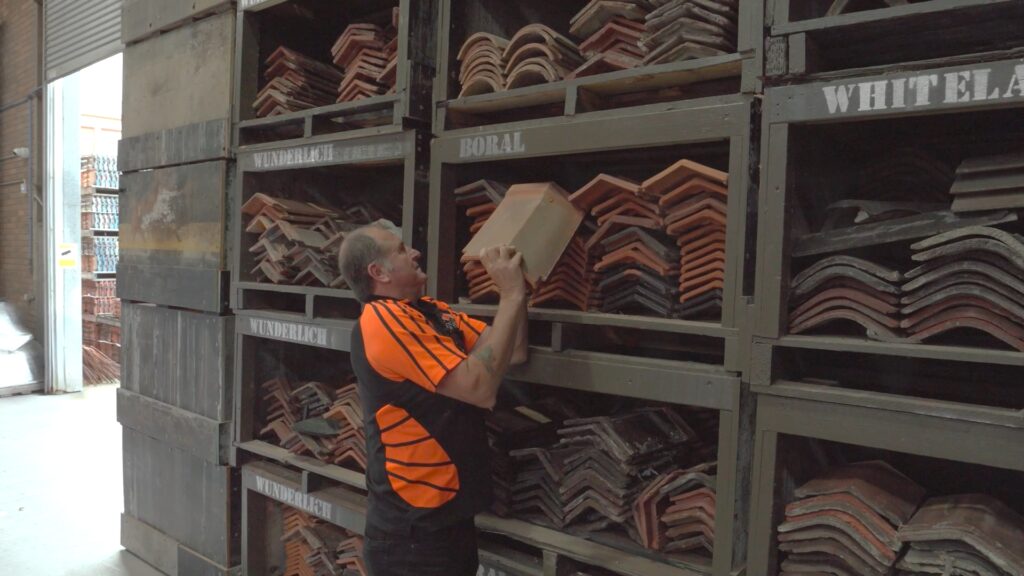
Ridge, hip & barge caps
Recycled concrete and terracotta ridges, barge caps, starters, spoons, saddles and finials, matched to your roof from a photo. See our ridge capping tiles page.

Bedding sand & cement
Yellow brickies sand, sold by the bucket, and Australian-made Eureka GP Cement. These are the two ingredients in the mortar bed that every ridge and hip cap sits on.
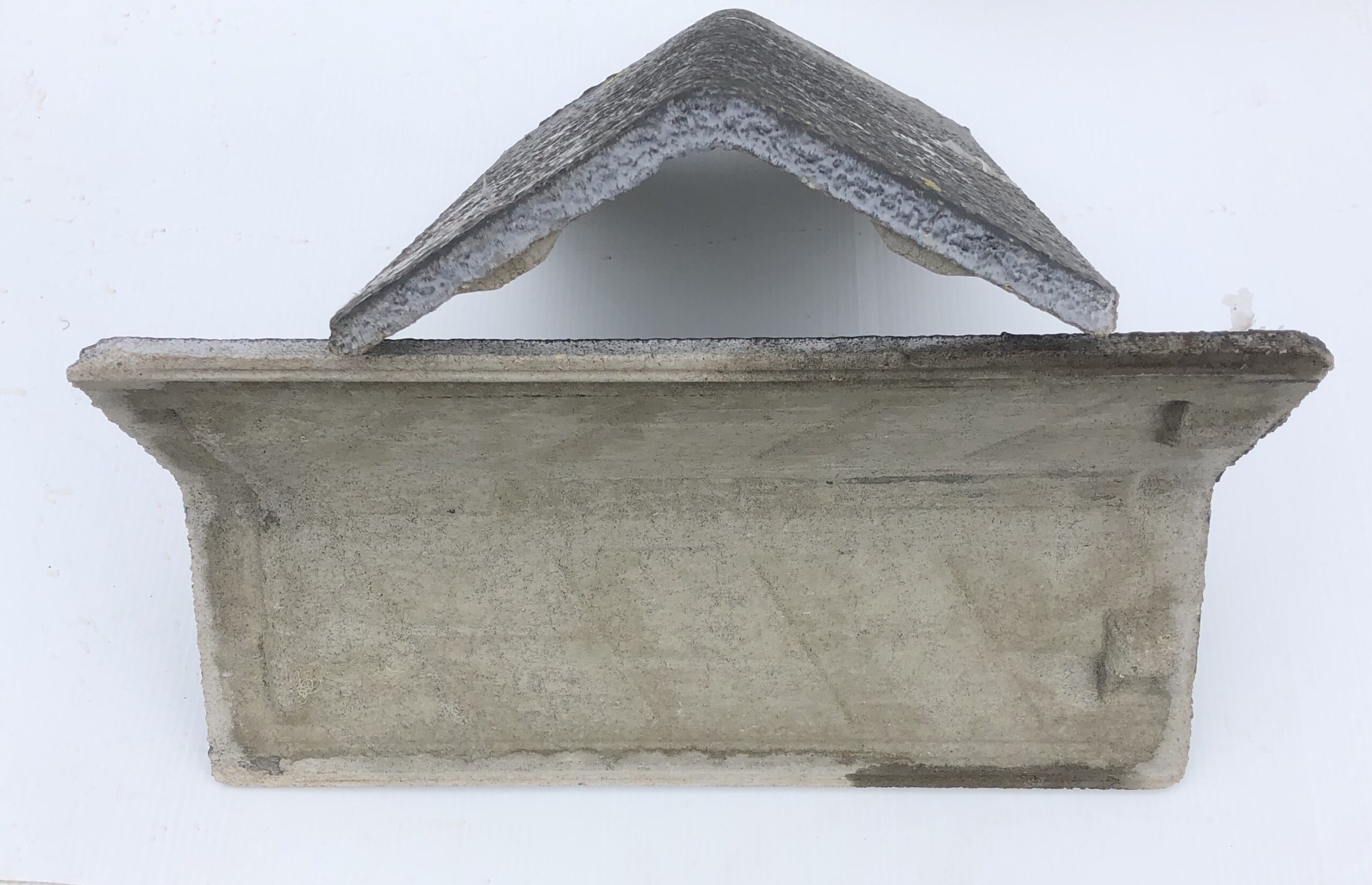
Flexible pointing
The flexible finishing compound that seals each cap and holds it to the tiles. Ask for the colours in stock. Each 10 L pail covers about 22 m of ridge.

Fast-A-Flex flexible flashing
Self-adhesive, lead-free EPDM rubber flashing with a butyl backing, in 300 mm rolls in Black, Graphite and Terracotta. It moulds over tile profiles by hand.

Lead sheet
For chimneys, abutments and heritage work where lead is specified. Available in 300, 350, 450 and 600 mm widths, in 3 m, 20 kg rolls.

Whirlybirds & roof vents
Bradford Windmaster and Spinaway wind-driven ventilators in mill finish and Colorbond colours, plus Supavents and the Solar X Vent.

Battens & sarking
Pine tile battens in 38 × 28 and 38 × 38, with bulk-buy pricing. Sarking is available too. Ask for current stock.

Leaf Stopper gutter & valley guard
A mesh shield for gutters and roof valleys that lets leaves blow off rather than pile up and push water back under the tiles.

Selleys Roof & Gutter sealant
Selleys Roof & Gutter sealant in Black, Clear and Grey, sold by the tube or in boxes of 12, for flashing laps and penetrations.
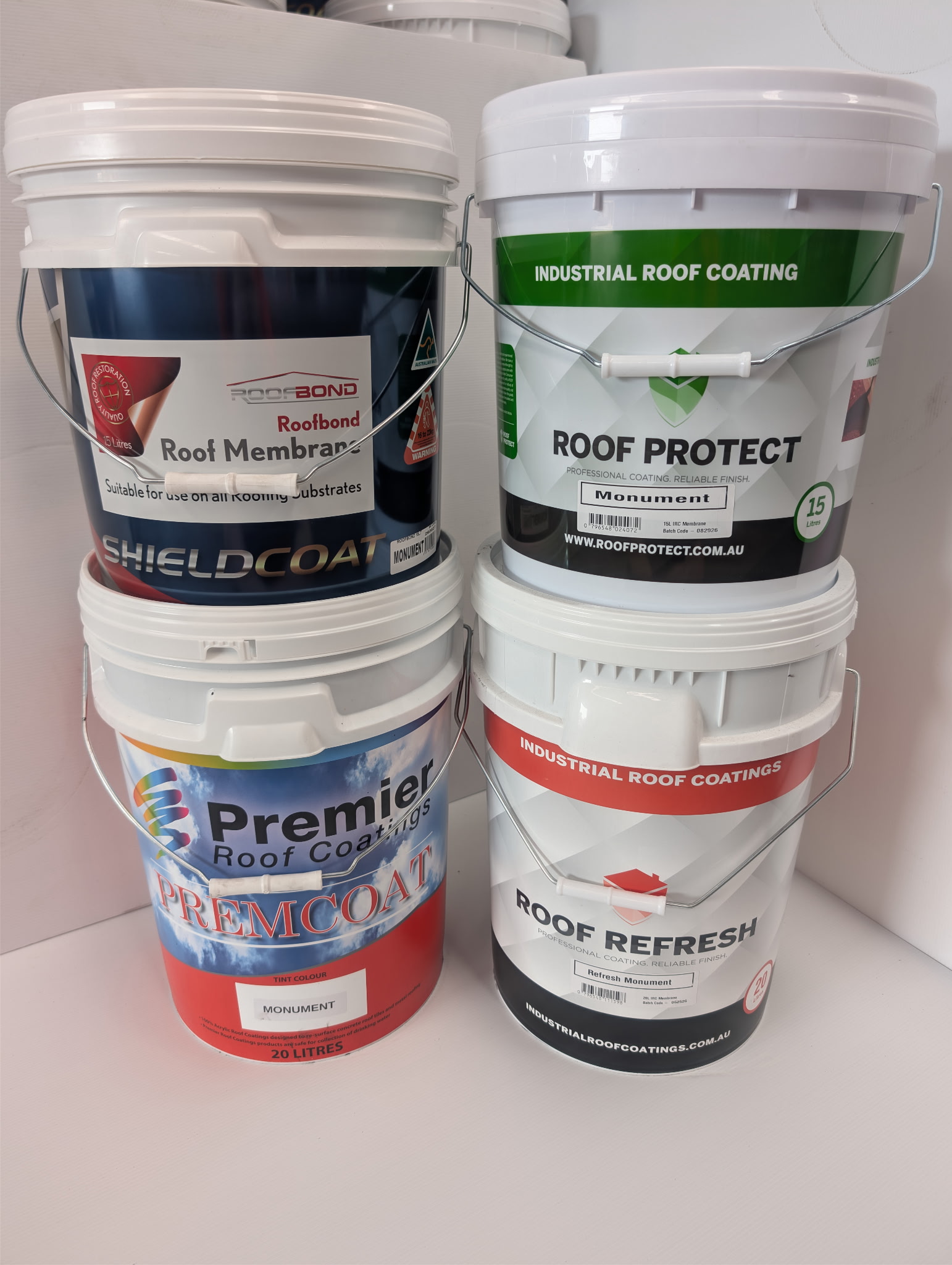
Roof paint, primers & sealers
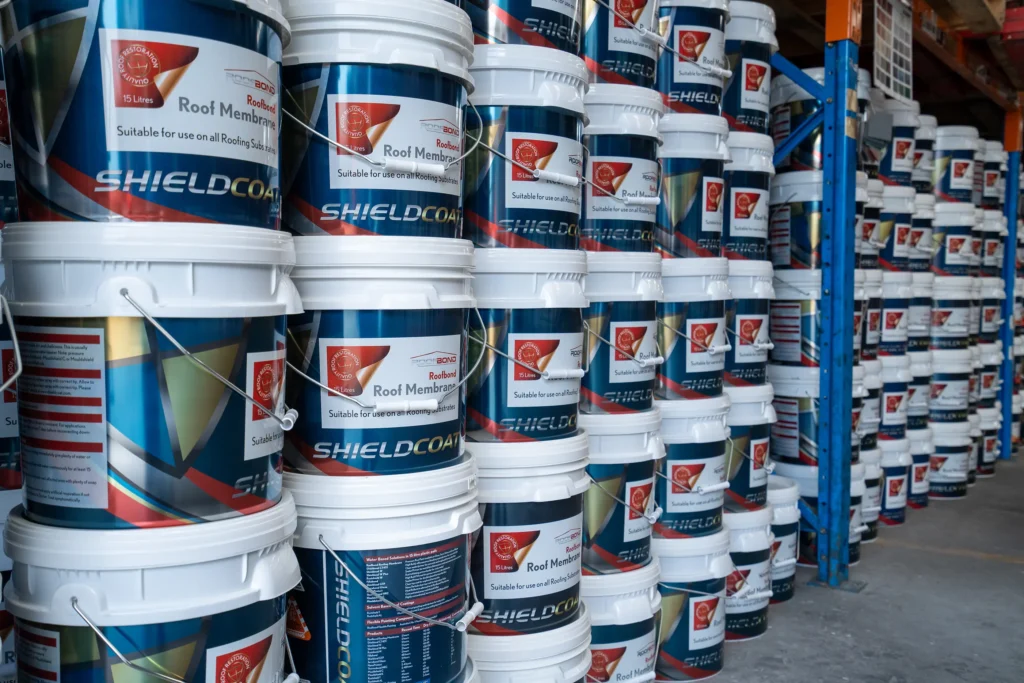
100% acrylic membrane coatings, primers and sealers for concrete tiles and Colorbond. See our roof paint range.
BRANDS YOU WILL FIND ON OUR WEBSITE AND IN OUR RANGE






Choosing Well: Four Comparisons We Explain Every Week
Most accessory questions at our counter come down to choosing between two products that seem to do the same job. They rarely do.
Lead flashing vs flexible flashing
Lead has flashed Australian chimneys and walls for a century. It is durable and holds its shape once dressed, and some heritage roofs and specifications still call for it. But it is heavy, it takes skill and tools to dress over a tile profile, and NSW Health advises that lead flashing should be avoided on roofs that collect rainwater. Self-adhesive EPDM flashings such as Fast-A-Flex are light, lead-free, and mould over tiles by hand, so for most residential repairs they have become the practical first choice.
| Lead sheet | Fast-A-Flex (EPDM) | |
|---|---|---|
| Material | Rolled lead, 20 kg per 3 m roll | EPDM rubber with butyl adhesive backing |
| Fitting | Dressed with tools, by an experienced hand | Self-adhesive, moulded over the profile by hand |
| Rainwater tanks | NSW Health advises avoiding it in roof catchments | Lead-free |
| Colours | Natural grey | Black, Graphite, Terracotta |
| Best for | Heritage work and specified jobs | Most residential repairs and solar penetrations |
Site-mixed bedding vs premix
Most NSW ridges are still bedded with site-mixed mortar: yellow brickies sand and GP cement such as Eureka, mixed on the ground and carried up. It is the cheapest way to bed a ridge, and roofers can adjust the mix to suit the cap. Premixed bags such as Cement Australia’s Roof Tile Bedding Mortar cost more per metre but give the same mix every time, which suits smaller jobs and less experienced hands. Cement Australia rates a 20 kg bag at about 3 metres of ridge.
Rigid cement pointing vs flexible pointing
Older roofs were pointed with the same sand and cement as the bedding, coloured with oxide. It sets hard, and when the roof moves with heat and moisture, it cracks along the joint. Flexible pointing is a polymer compound that stays flexible after it cures and moves with the roof. Products such as Monier Flexible Pointing are designed as an adhesive fastener for ridge and hip tiles, not just a seal. That is why almost every repoint in NSW now uses flexible pointing, applied 3 to 5 mm thick over sound bedding.
Wind-driven vs solar roof vents
Wind-driven whirlybirds such as the Bradford Windmaster and Spinaway use no power and spin whenever there is a breeze, so they suit exposed coastal and ridgetop homes well. Solar-powered vents such as the Solar X Vent use a small panel to drive a fan, and keep extracting on still, sunny days when a whirlybird is barely turning. On a tiled roof, both need a base that suits the tile profile, and a neat flashing around it.

Problems We Solve at the Counter
Customers rarely ask for a product by name. They describe a problem. These are the ones we hear most, and what we send them home with.
A leak where the roof meets a wall or chimney
THE PROBLEM
Water stains on a ceiling near a brick wall or chimney, often after wind-driven rain. The old lead or mortar flashing has cracked, lifted or pulled away from the tiles.
THE FIX AND WHAT IT COSTS
Flexible flashing such as Fast-A-Flex, dressed over the tile profile and lapped correctly into the wall, with Selleys Roof & Gutter sealant on the top edge where it is needed. A roll of flashing is a modest outlay compared with a ceiling repair.
Valleys that overflow in every storm
THE PROBLEM
Leaves and debris build up in the valley and gutter, and heavy rain backs up under the tiles instead of running off. This is common under gums and in leafy Central Coast and Lake Macquarie suburbs.
THE FIX AND WHAT IT COSTS
Clean the valley, replace any cracked tiles beside it, and fit Leaf Stopper over the gutter and valley so the leaves blow off. If the valley iron itself has rusted through, that is a job for your roofer.
Ridge pointing cracking again a year after a repoint
THE PROBLEM
New pointing was applied over bedding that had already let go, or it went on too thin. The cap still moves, and the pointing splits along the same line.
THE FIX AND WHAT IT COSTS
Rebed the affected runs with sound mortar, then point with a flexible compound at the manufacturer’s 3 to 5 mm. We supply the sand, cement, pointing and any spare caps together. Our ridge capping cost guide explains what the labour costs.
A roof space like an oven
THE PROBLEM
Summer heat builds up under the tiles and radiates into the ceiling, especially in homes with dark roofs or little ventilation.
THE FIX AND WHAT IT COSTS
Roof ventilators let hot air escape. We stock Bradford Windmaster and Spinaway whirlybirds in Colorbond colours, plus Supavents and the Solar X Vent. Pair them with a lighter roof colour at the next restoration. Our guide to roof colour and solar absorptance explains why.
Tiles broken after a solar install
THE PROBLEM
Installers have cracked tiles walking the roof or cut them badly around the panel brackets. The replacements they used do not match, and some penetrations are not sealed.
THE FIX AND WHAT IT COSTS
We supply matching recycled tiles and flexible flashing for around the brackets. See broken roof tiles after solar installation.
Expert Advice From Our Yard
Over 40 years in the roofing industry teaches you that most accessory problems come down to buying the wrong product or the wrong quantity. A few habits avoid both.
Buy for the whole job, once
Running short of pointing or caps halfway along a ridge is the most common reason a job stretches into a second day. Use the rules of thumb: about 2.5 caps per metre plus 10%, about 22 m per 10 L pail of pointing, and about 3 m per 20 kg bag of premixed bedding. Then round up. Unopened product is easier to deal with than a half-finished ridge.
Match the colour of the pointing to the roof
Pointing is visible from the street. On an unpainted roof, choose a colour close to the weathered tile, not the colour on the original brochure. On a roof about to be painted, colour matters less, because the coating goes over the top.
Fix first, coat last
Primer and membrane coatings protect a sound roof. They do not hold down a loose cap or seal a failed flashing. Every restoration should replace broken tiles, rebed or repoint ridges and fix flashings before any roof paint goes on.
Know where DIY stops
You can buy any accessory from us. Whether you should fit it yourself is a different question. Roof work is dangerous, and bedding, pointing and flashing are classed as roof tiling work in NSW. Any residential job over $5,000 including materials must be done by a licensed contractor. Homeowners save most by having the right materials on site before the roofer arrives.
| Job | What to have on site | Rule of thumb |
|---|---|---|
| Rebed and repoint a ridge | Spare caps, sand and cement or premix, flexible pointing | 2.5 caps per m + 10% · 20 kg premix per ~3 m · 10 L pointing per ~22 m |
| Repoint only | Flexible pointing | 10 L per ~22 m of ridge |
| Wall or chimney leak | Fast-A-Flex or lead sheet, sealant | Abutment length + 10% |
| Valley clean-up | Leaf Stopper, spare tiles | Valley length + gutter run |
| Extension tie-in | Matching tiles and caps, battens, sarking | Tiles per m² for the profile + 10% |
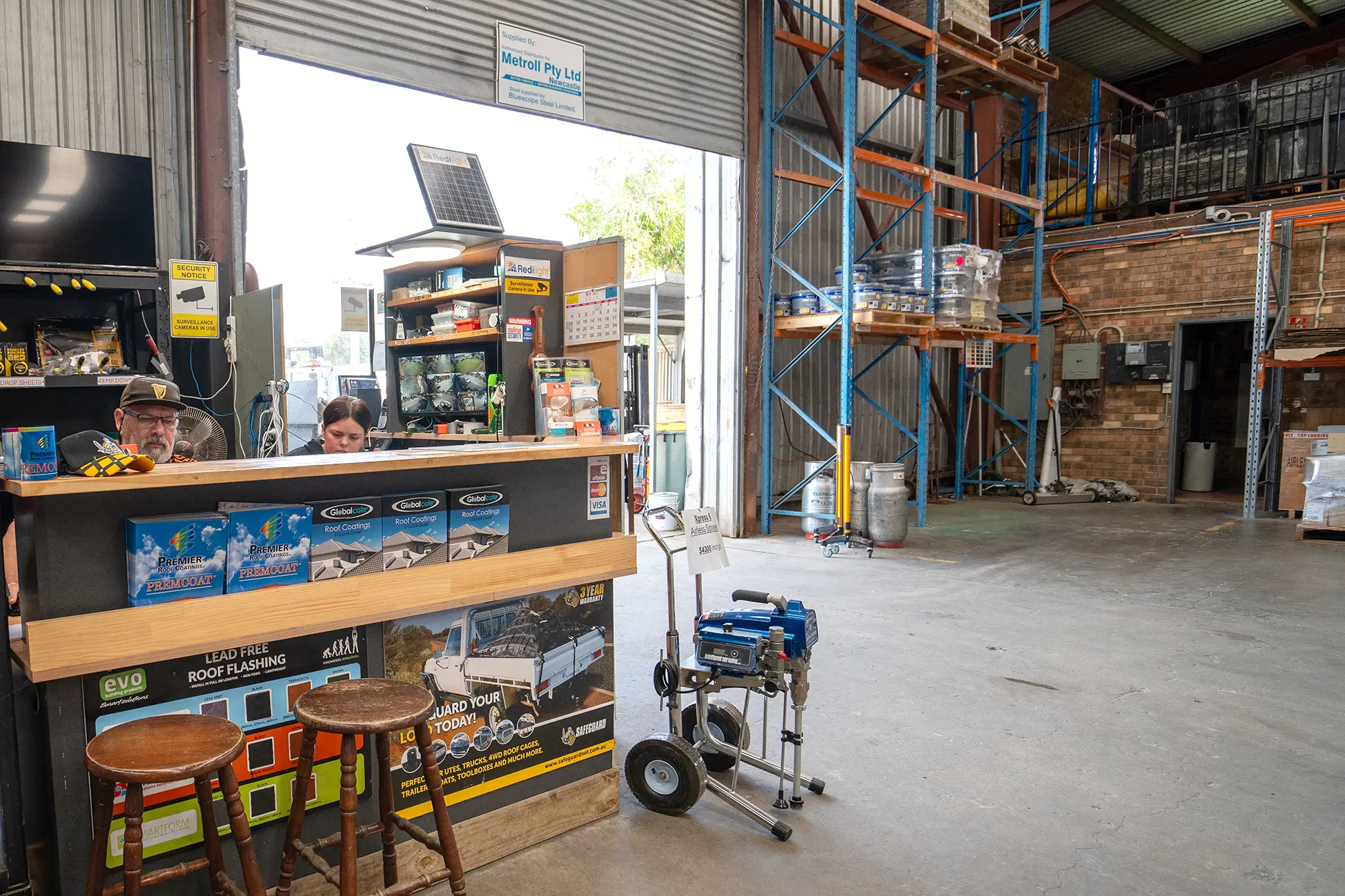
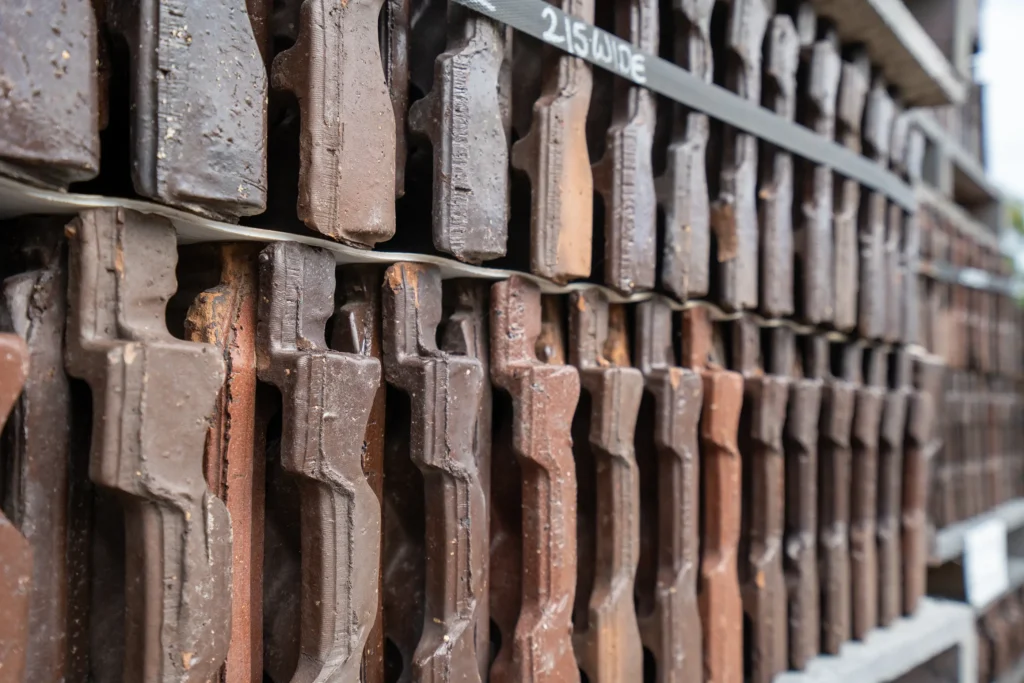
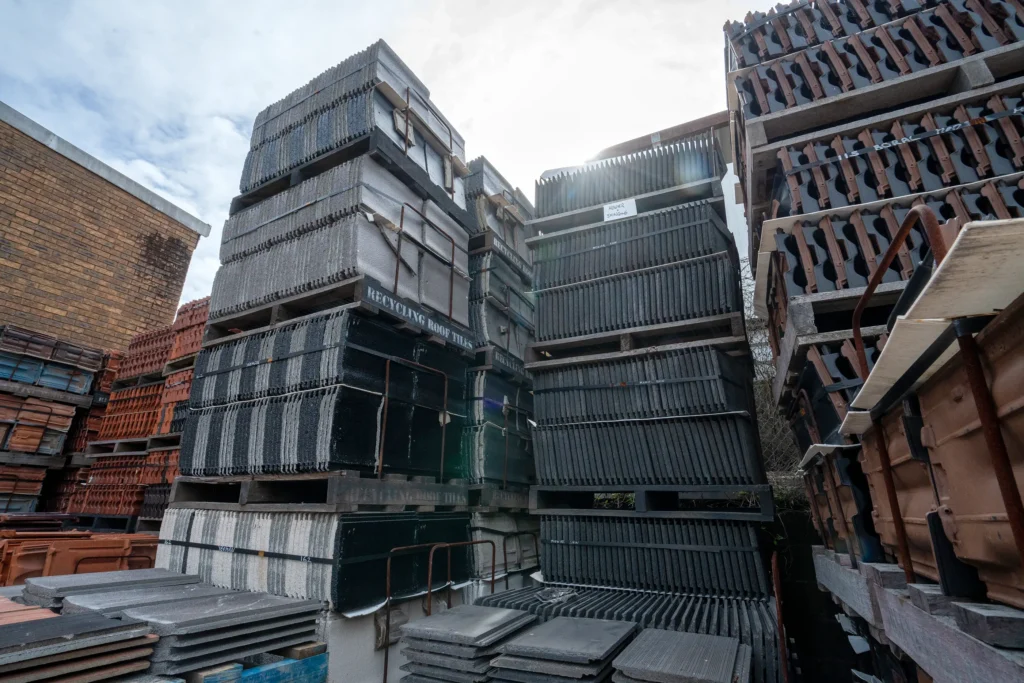
Tiles, caps and accessories under one roof at 6 David St, Doyalson.
Why Trades Load Up Here Before Sunrise
Our gates open at 5:30 am for trades, Monday to Friday, so roof tilers and restorers can collect tiles, caps, bedding and pointing in one stop and still be on the roof early. Battens come with bulk-buy pricing. We identify discontinued tile and cap profiles free from a site photo, so nobody arrives at a job with the wrong match. We deliver to site across the Central Coast, Lake Macquarie, Newcastle, Maitland and the Hunter, and Sydney.
Behind the counter is an owner with more than 40 years in the roofing industry, a trade-qualified team, and a covered Doyalson warehouse that has been supplying NSW roofs since 2019. Because we are a recycler, the tiles and caps that go out with your accessories would otherwise have gone to landfill.


Pick Up From Doyalson, or Get It Delivered
Our yard is at 6 David St, Doyalson NSW 2262, between the Central Coast and Lake Macquarie. Trades can collect from 5:30 am, Monday to Friday. Everyone else is welcome from 6 am to 4 pm on weekdays, and from 7 am to 12 pm on Saturday. We are closed Sundays and public holidays. Call 0427 241 224 for a delivery price to your site.
Send your materials list, or a photo of the job, to 0427 241 224. We will have it ready for pick-up or delivery.
Get an Accessories QuoteRoof Tile Accessories FAQs
What accessories do I need to repair a tiled roof?
It depends on the job. Replacing broken tiles usually needs only matching tiles. Rebedding a ridge needs matching spare caps, bedding sand and cement, and flexible pointing. Leaks at chimneys, walls and skylights need flashing and sealant. Blocked valleys need valley guard. Send us a photo and we will put the list together.
Can I buy roofing accessories without buying tiles?
Yes. Builders, roof tilers and homeowners buy accessories from us on their own, from a single tube of sealant to bulk battens.
What has replaced lead flashing on tiled roofs?
Self-adhesive flexible flashings made from EPDM rubber with a butyl adhesive backing are now widely used instead of lead. We stock Fast-A-Flex, a lead-free EPDM flashing in 300 mm rolls in Black, Graphite and Terracotta. Lead sheet is still available where it is specified.
How much flexible pointing do I need?
Monier’s technical data puts one 10 L pail of flexible pointing at about 22 metres of ridge when the bedding is finished correctly. A typical single-storey home with 25 to 40 metres of ridge and hips needs two pails.
How much bedding do I need for a ridge?
As a guide, Cement Australia rates a 20 kg bag of premixed roof tile bedding mortar at about 3 lineal metres of ridge or hip. Site-mixed quantities depend on the cap size and the mix your roofer uses.
Do you deliver roofing accessories?
Yes. We deliver accessories with tile orders or on their own across the Central Coast, Lake Macquarie, Newcastle, the Hunter and Sydney. Call for a delivery price to your suburb, or pick up from 6 David St, Doyalson.
What time do you open for trades?
Trades can pick up from 5:30 am Monday to Friday. We are open to everyone 6 am to 4 pm weekdays and 7 am to 12 pm Saturday, and closed Sundays and public holidays.